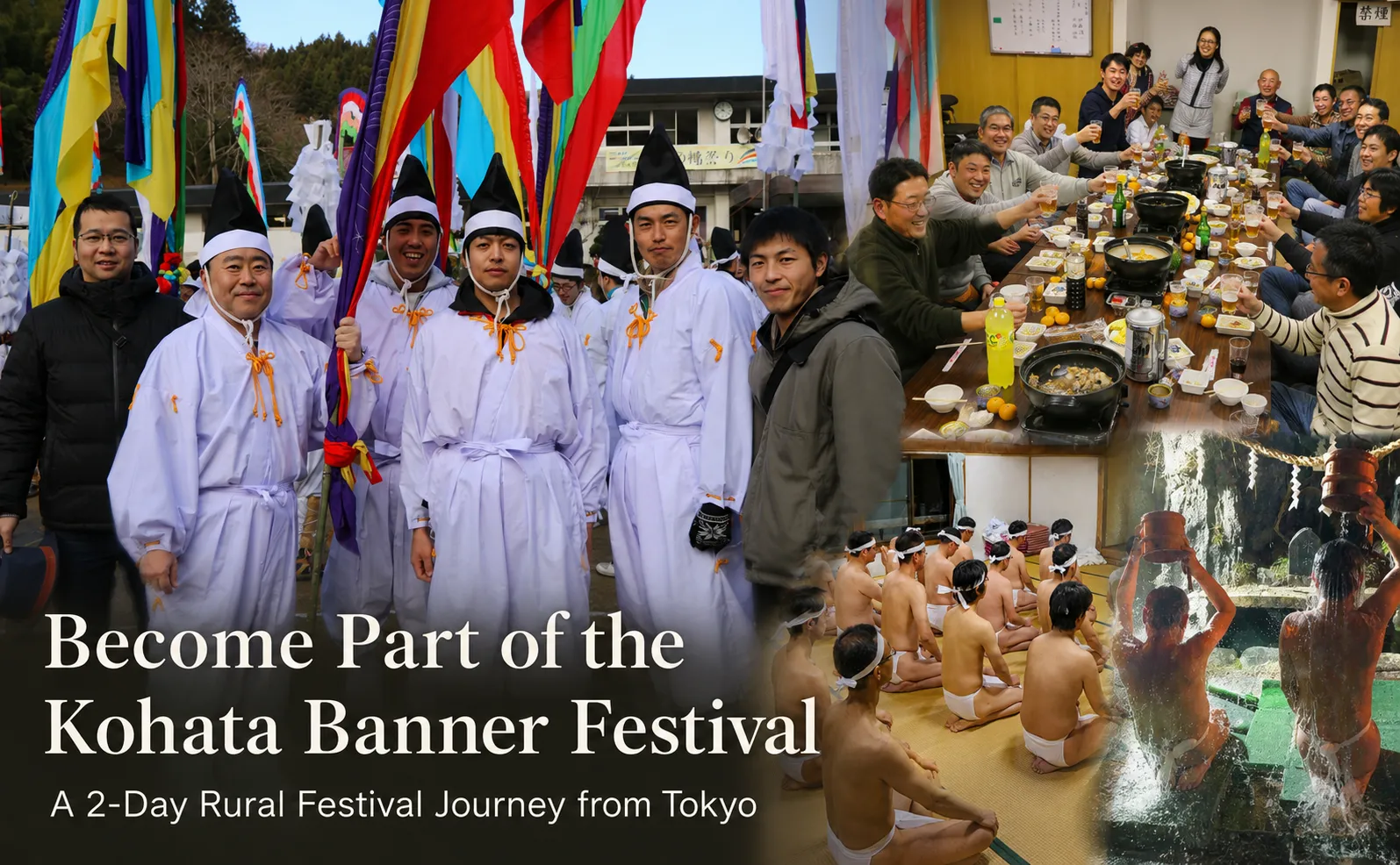
A 2-Day Rural Festival Journey from Tokyo
2 Days / 1 Night · December 5–6, 2026 · From Nihonmatsu Station
From Tokyo into the Heart of Rural Fukushima
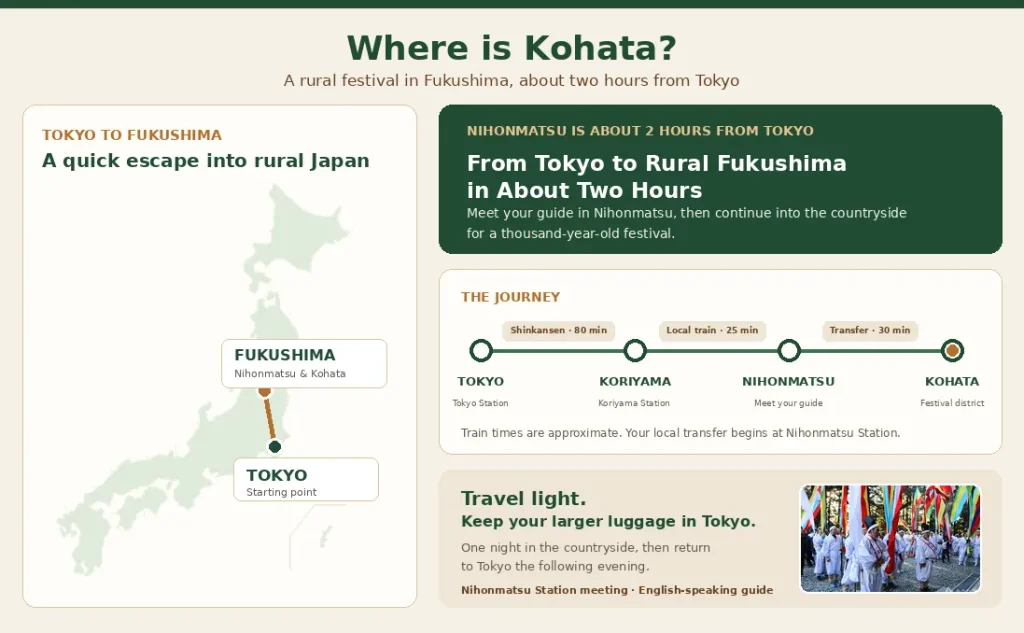
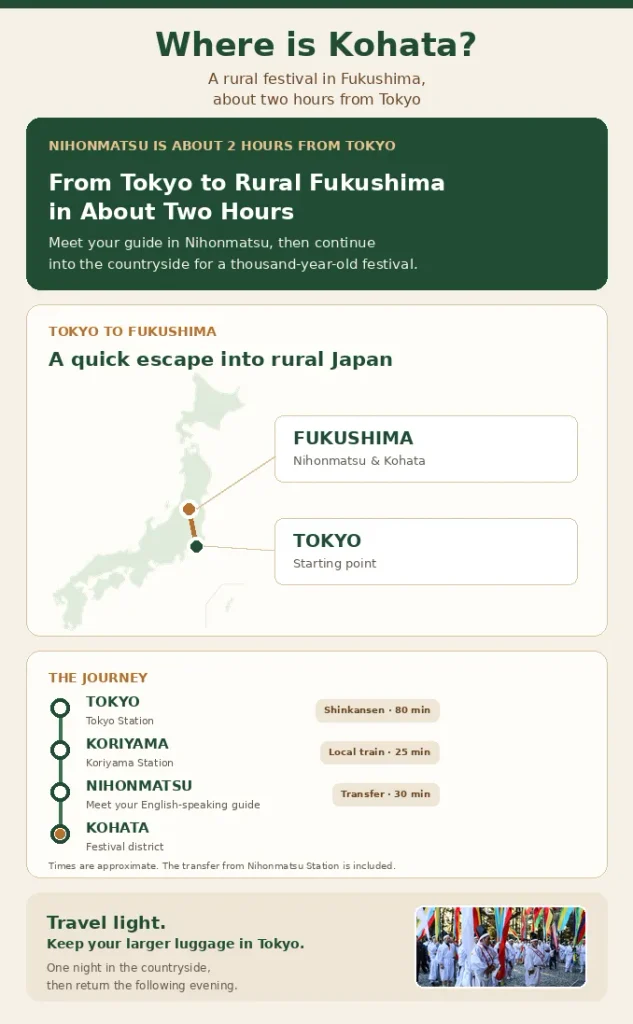
Designed for travelers staying in Tokyo, this two-day journey offers an easy way to experience rural Japan without changing your main hotel. Leave your larger luggage in Tokyo, travel light, and reach Nihonmatsu Station in about two hours by train. After one night in the countryside, you can return to Tokyo the following evening.
Every December, the Kohata district of Nihonmatsu, Fukushima, comes together for the Kohata Banner Festival, a tradition that has continued for nearly 1,000 years. It is nationally designated as an Important Intangible Folk Cultural Property of Japan.
This journey begins the day before the festival. You will join local residents as they prepare the handmade banners and bamboo poles. Male guests may also choose to take part in mizugori, a traditional cold-water purification ritual. Later, everyone gathers for naorai, a communal meal held after a sacred ritual, with local food, Fukushima sake, and conversation around the table.
After spending the night at a local farmstay, you will dress in the same white festival clothing as the community and help carry the banners toward Mount Kohata. As you work, eat, and walk together, the people you have just met begin to feel less like hosts and more like members of the same team.
This is not a journey where everything is prepared for you. You will lend a hand, share the table, and help bring that year’s festival to life with the people of Kohata.
What You’ll Be Part Of
- Help local residents prepare the handmade banners and bamboo poles used in the festival
- For male guests who wish to join, wear a fundoshi, a traditional Japanese loincloth, and take part in the winter mizugori purification ritual
- Gather around the table for naorai with local home-style food, Fukushima sake, and conversation
- Dress in the same white festival clothing as the community and take turns carrying a banner during the approximately 5-kilometer procession
- Stay at a local farmstay in Kohata and spend time with your hosts and fellow guests
Rather than watching the festival from the outside, you will join the preparations and help the community bring that year’s celebration to life.
A Festival Carried Forward for Nearly 1,000 Years
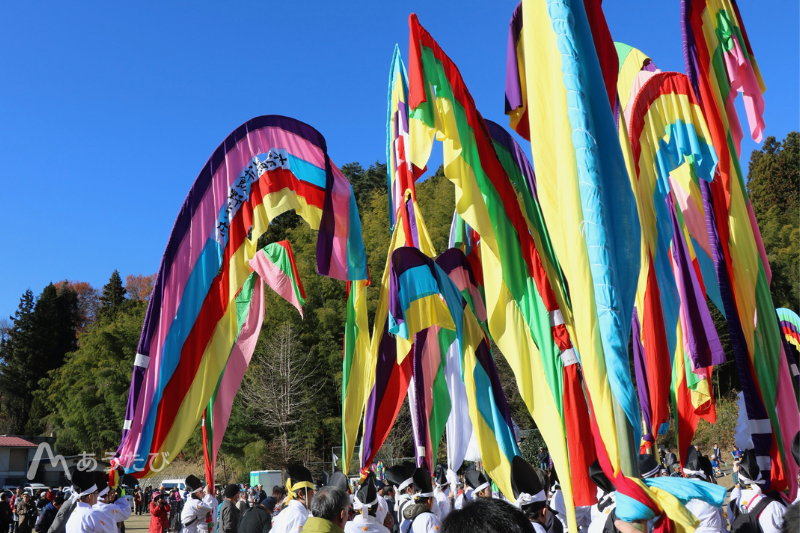
The origins of the Kohata Banner Festival are said to date back to 1055, during the Former Nine Years’ War.
After suffering defeat, the military leader Minamoto no Yoriyoshi and his son Yoshiie fled to Mount Kohata with only a small group of soldiers and prayed for victory. That night, an unseasonal snowfall covered the mountain in white. The pursuing forces mistook the snow-covered trees for countless white banners belonging to a large Minamoto army and withdrew.
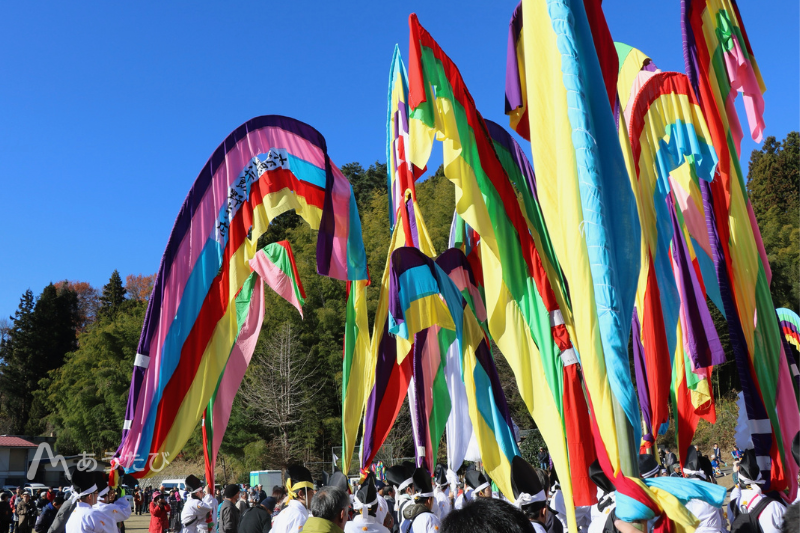
In gratitude, local people began offering banners to Mount Kohata. This tradition is believed to have grown into the festival celebrated today. A white banner now leads the procession, followed by colorful banners moving through the winter landscape to the sound of conch shells and taiko drums.
For nearly 1,000 years, the festival has been prepared and carried forward by the people of Kohata. In 2004, it was designated an Important Intangible Folk Cultural Property of Japan and remains one of the community’s most important annual traditions.
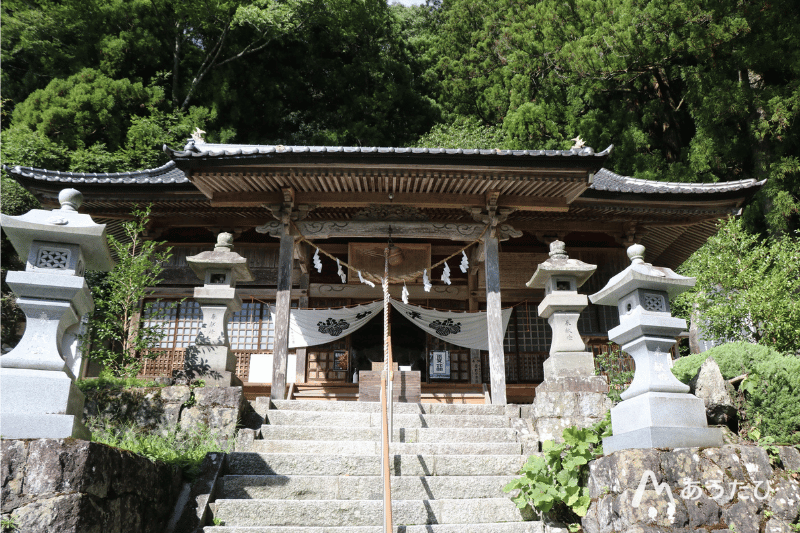
Okitsushima Shrine, the Sacred Setting of the Festival
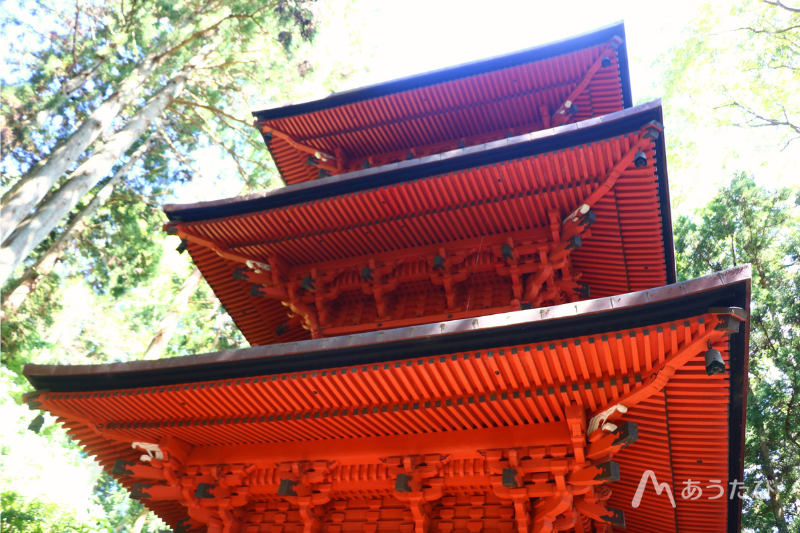
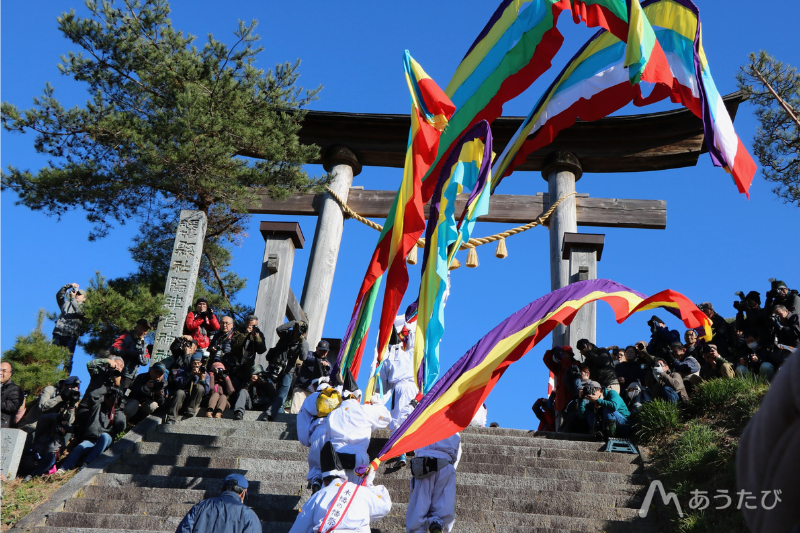
Okitsushima Shrine, where the Kohata Banner Festival takes place, is believed to have been founded in 769 and has a history of more than 1,200 years.
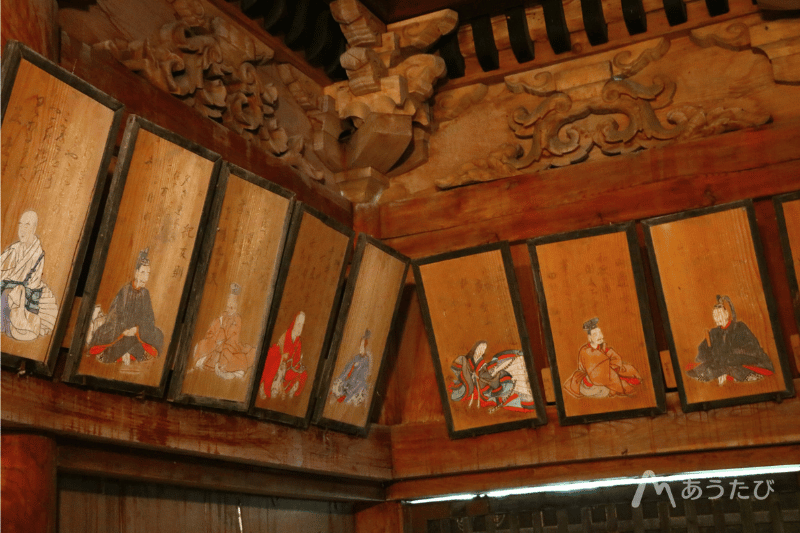
During the Heian period, Benzaiten, a Buddhist deity, was enshrined here. Over time, the mountain became a place where Shinto and Buddhist traditions came together and where generations of local people offered their prayers. When buildings across Mount Kohata were lost to fire, the shrine was rebuilt with the support of the community and has continued to be cared for ever since.
On the festival day, the procession carries its colorful banners up Mount Kohata toward Okitsushima Shrine. It is a place where the festival’s long history and the commitment of the people who continue it come together.
Experience Details
Day1 14:00 | Prepare the Festival with Local Residents
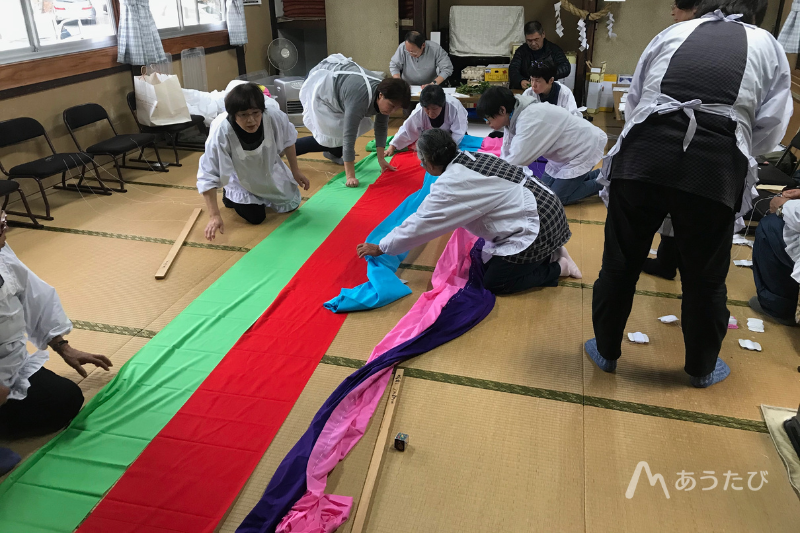
The banners used in the Kohata Banner Festival are made by hand each year by local residents. You will join members of the local dosha, the neighborhood groups that prepare and carry the festival forward, and help with the banners and bamboo poles.
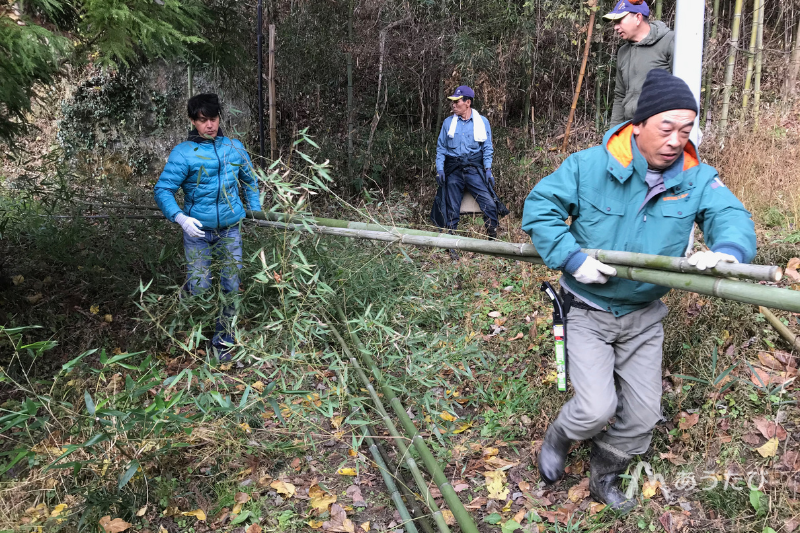
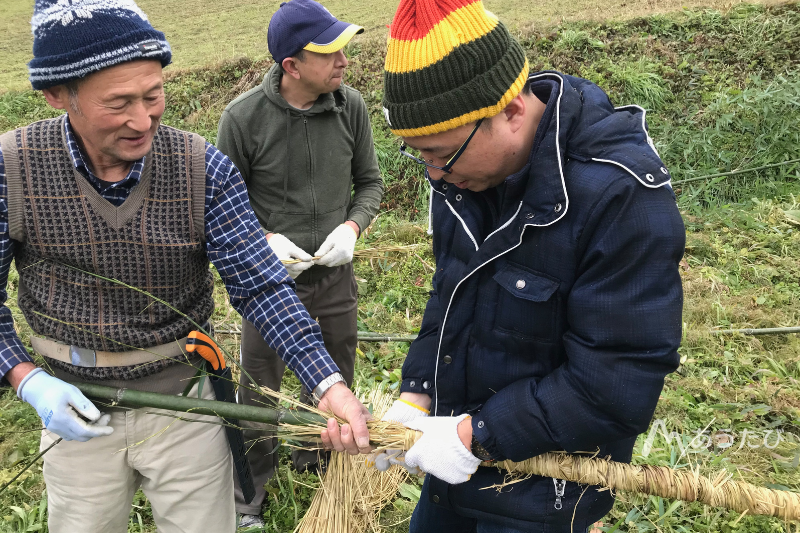
You may sew together long pieces of colorful fabric, carry freshly cut bamboo from the nearby mountain, or wrap straw around the poles. The work varies depending on what still needs to be done that year, and local residents will guide you through each step.
You may feel a little unsure at first, but conversation begins naturally as everyone works side by side. The next day, you will see the banners you helped prepare moving through the winter landscape. That is part of what makes joining from the day before so meaningful.
17:00 | Mizugori, a Winter Purification Ritual
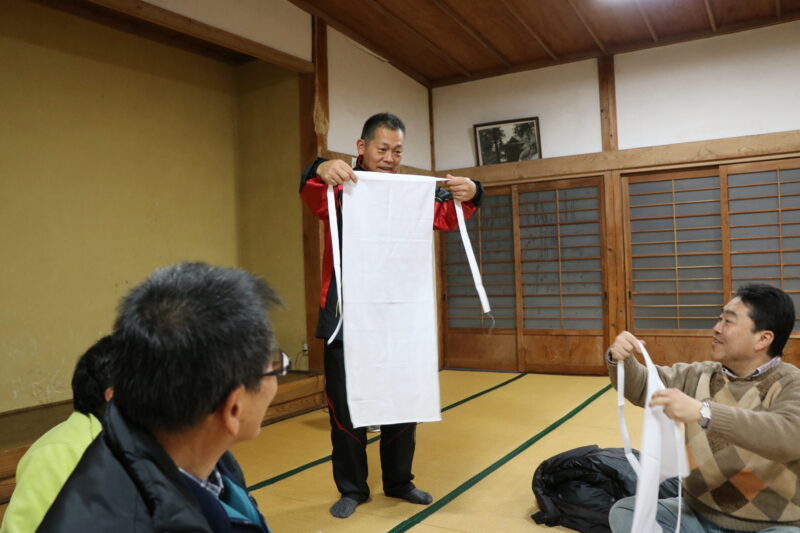
On the evening before the festival, male guests who wish to join may take part in mizugori, a traditional ritual using cold water to purify the body and mind before prayer. Participants change into a fundoshi, a traditional Japanese loincloth, and prepare for the ritual together.
Local residents will show you how to wear the fundoshi, so no previous experience is needed. Everyone then warms up together, moving their bodies and calling out in unison.
When the group is ready, participants shout “Ei-sa! Ei-sa!” and pour buckets of cold water over themselves at the same time. Temperatures at this time of year are often around 2–3°C (35–37°F) and may fall below freezing. It is, quite honestly, very cold. But the sense of relief and togetherness afterward is something participants share as a group.
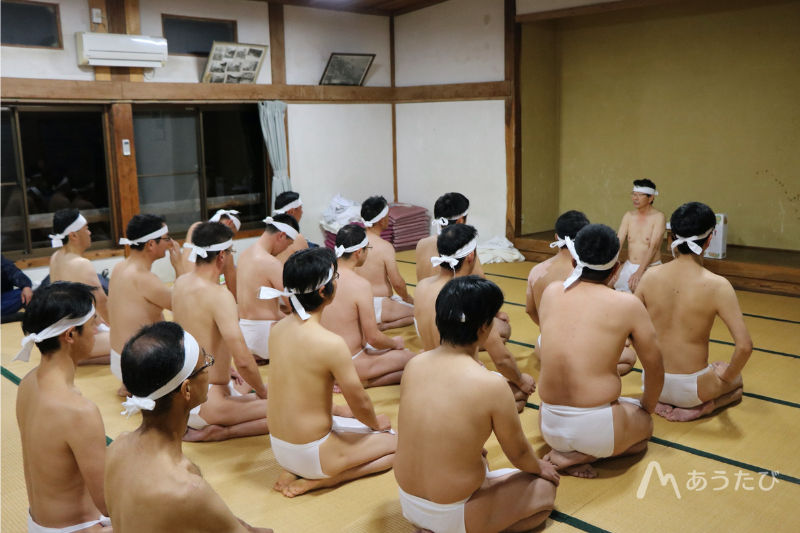
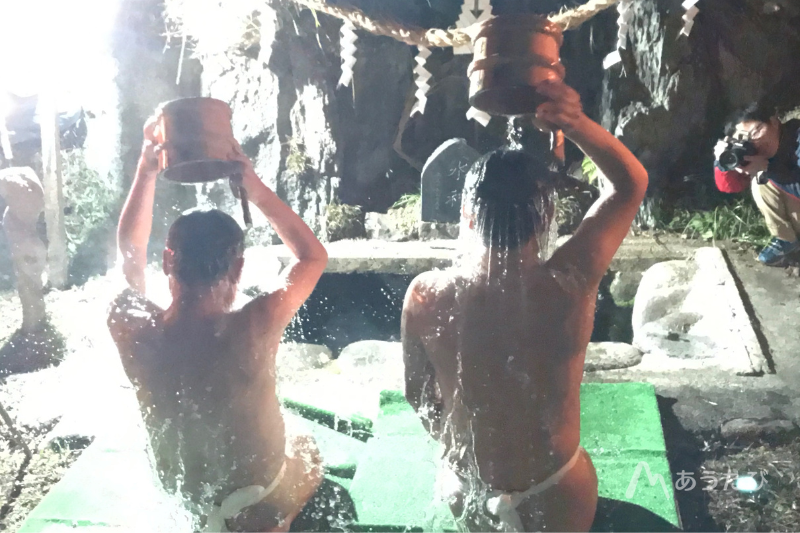
Taking part in mizugori is completely optional and is currently open to male participants only. Female guests are welcome to observe. Anyone with concerns about their health should watch rather than participate.
19:00 | Naorai with the Community
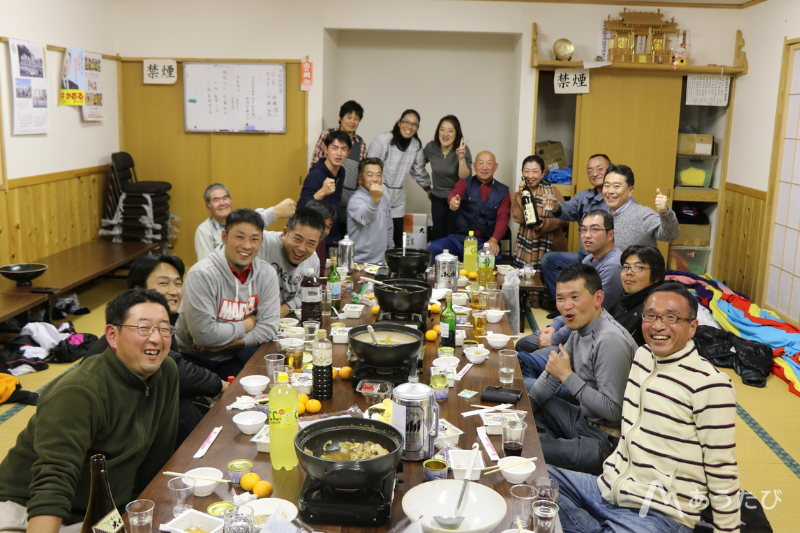
After mizugori, you will join members of the local dosha, the same community group you worked with during the festival preparations, for naorai. Naorai is a traditional gathering held after a sacred ritual, when people come together to share food and drinks. Around the table, you will enjoy home-style dishes prepared by the community, along with local sake from Fukushima.
During the preparations, there may not have been much time for conversation. Once everyone sits down together, however, stories begin to flow naturally. You may talk about the festival, life in the countryside, work, family, or simply share a laugh. Even if you felt a little nervous at first, you may soon find yourself becoming part of the gathering.
Here, KANPAI is more than a toast. It marks the moment when the people you worked beside begin to feel less like strangers and more like friends around the same table.
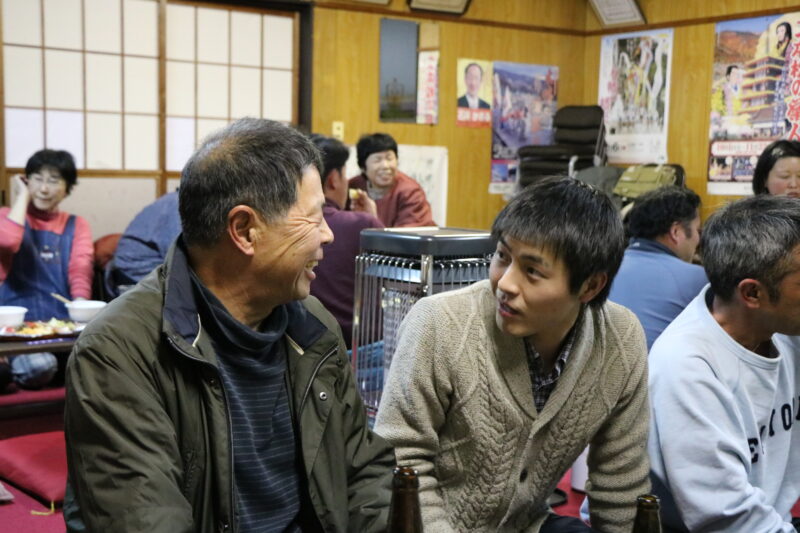
Sake is generously shared during the evening, but drinking alcohol is entirely optional. Non-drinkers are equally welcome. What matters is not how much you drink, but the time you share with the people of Kohata.
21:00 | Overnight at a Local Farmstay
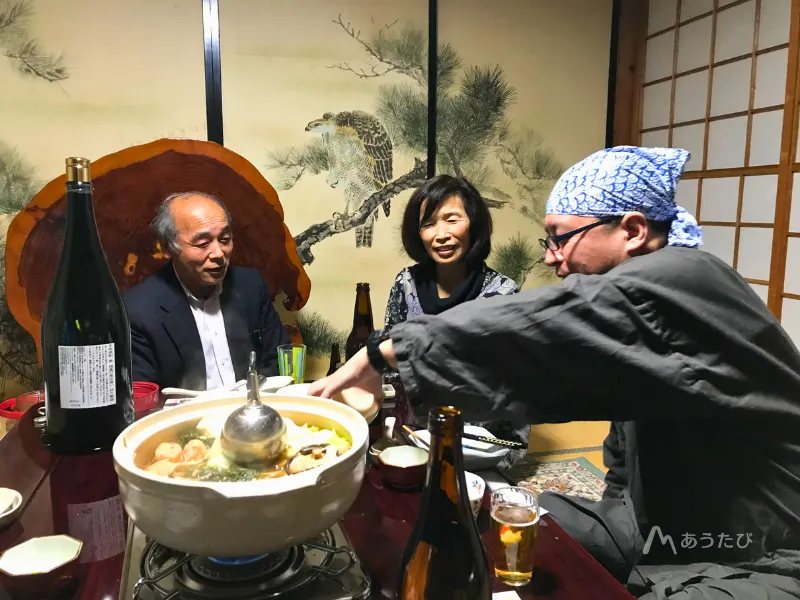
After the naorai gathering, you will travel to a small farmstay in the Kohata district for the night.
This is not a full-service hotel or ryokan. It is a simple, family-run place to stay, closely connected to everyday life in the community. Guests stay in shared rooms separated by gender. Take time to look back on the day with your fellow travelers, or continue the conversation with your hosts over one more drink.
By preparing for the festival, sharing the same table, and sleeping in the community, you will experience a side of rural Japan that cannot be found through sightseeing alone. It is a quiet night spent, for a short while, as part of life in Kohata.
Day 2 8:00 | The Festival Begins
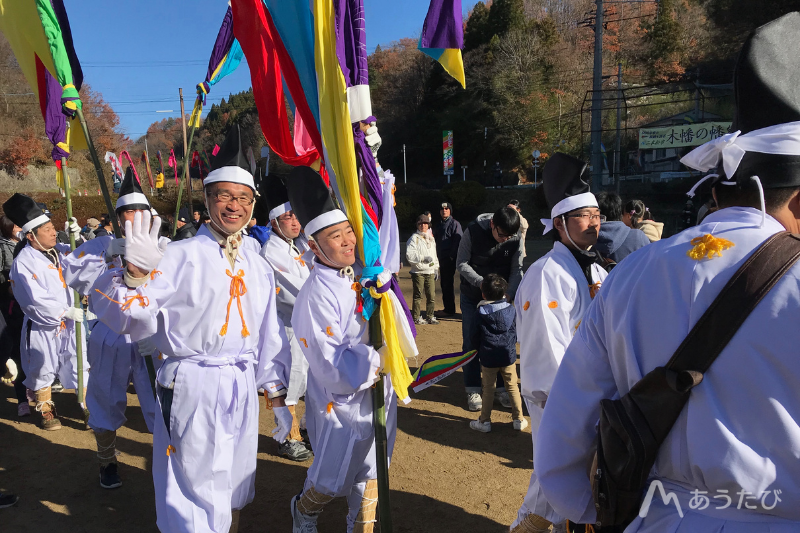
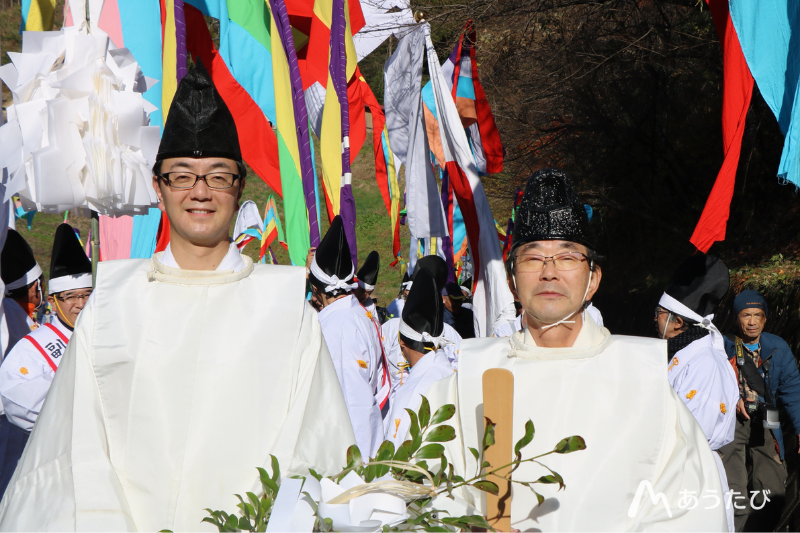
After breakfast, you will change into the same white festival clothing worn by the local participants and rejoin the members of the dosha you helped the day before. At the departure ceremony, the festival leader and the shrine’s chief priest offer their greetings. Then, the sound of a horagai conch shell signals that the festival is about to begin.
Before setting out, participants may be offered omiki, sacred sake that has been presented to the deities. You may be invited to drink more than once, even in the morning, but drinking alcohol is entirely optional. If you choose to drink, please enjoy it at your own pace.
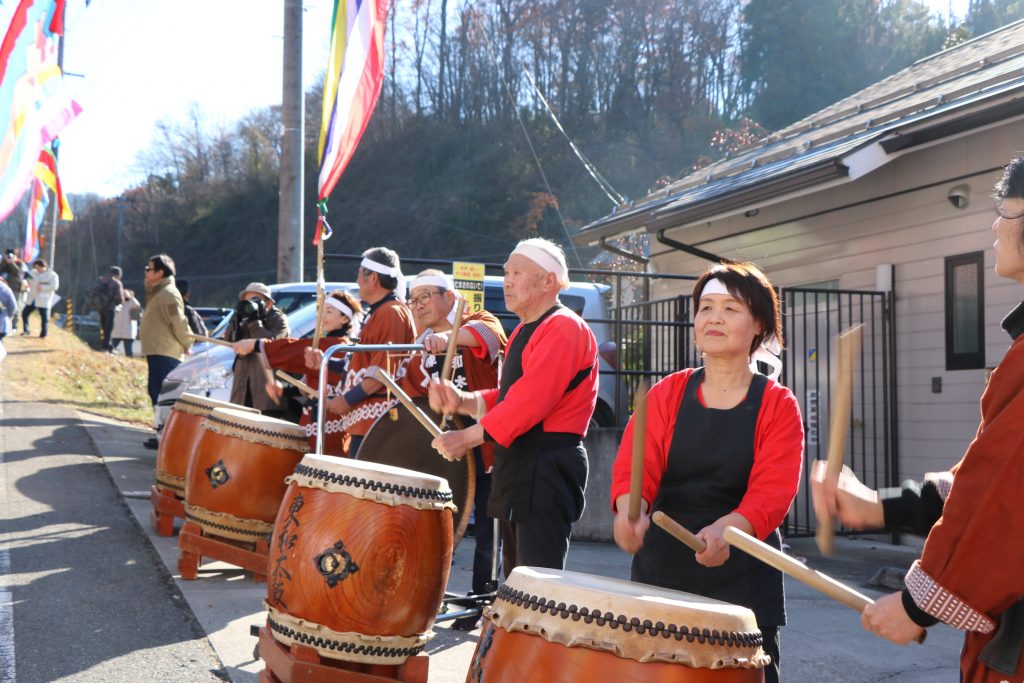
The conch shell sounds, the drums begin to echo, and the colorful banners start moving together. This time, you are not watching from the side. Wearing the same festival clothing as the people you worked with the day before, you will join them in the procession.
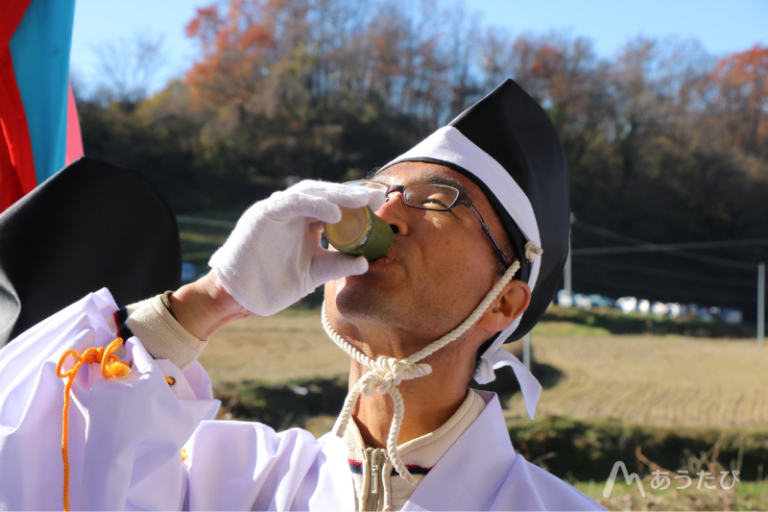
Carry the Banners with the Community to Mount Kohata
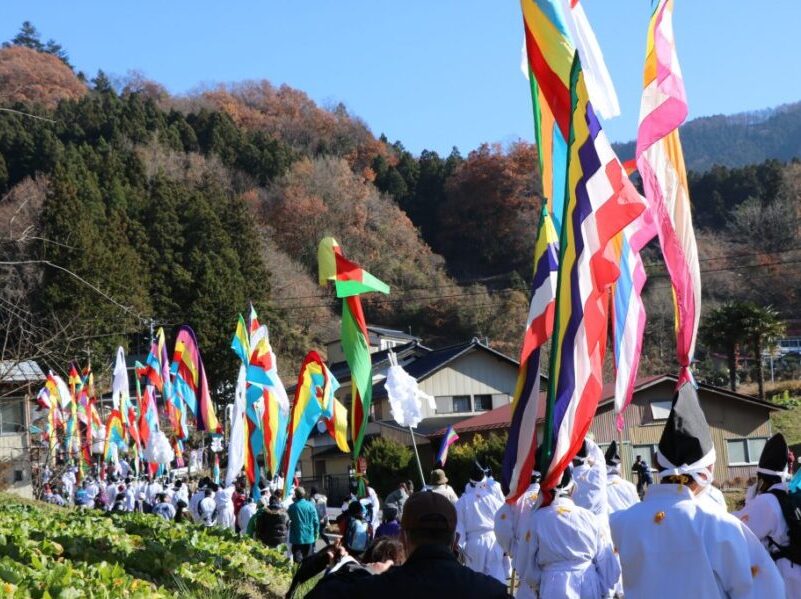
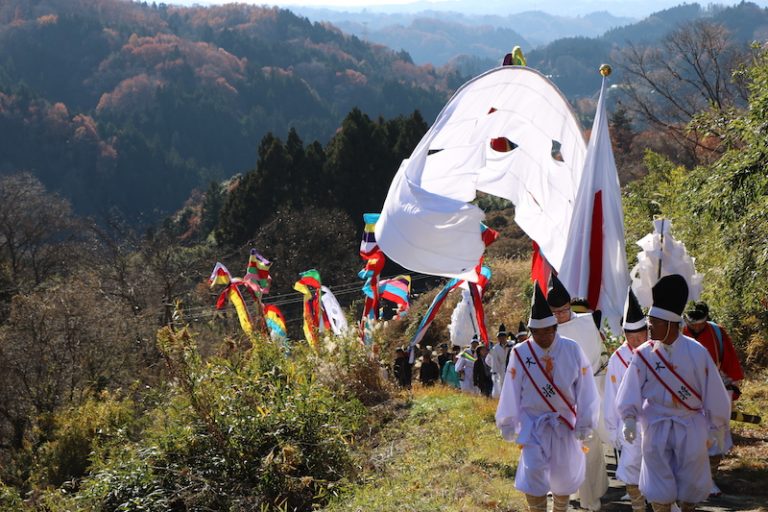
The procession makes its way toward Okitsushima Shrine on Mount Kohata, passing Hayama Shrine along the way. The route is approximately 5 kilometers (3.1 miles) and includes paved roads, slopes, and mountain paths.
Each large banner weighs approximately 10 to 15 kilograms (22 to 33 pounds), but you will not carry it for the entire route by yourself. Members of the dosha work together, calling out to one another and taking turns. When you feel tired, you can pass the banner to the person beside you and take a break. Please participate at a pace that suits your fitness level.
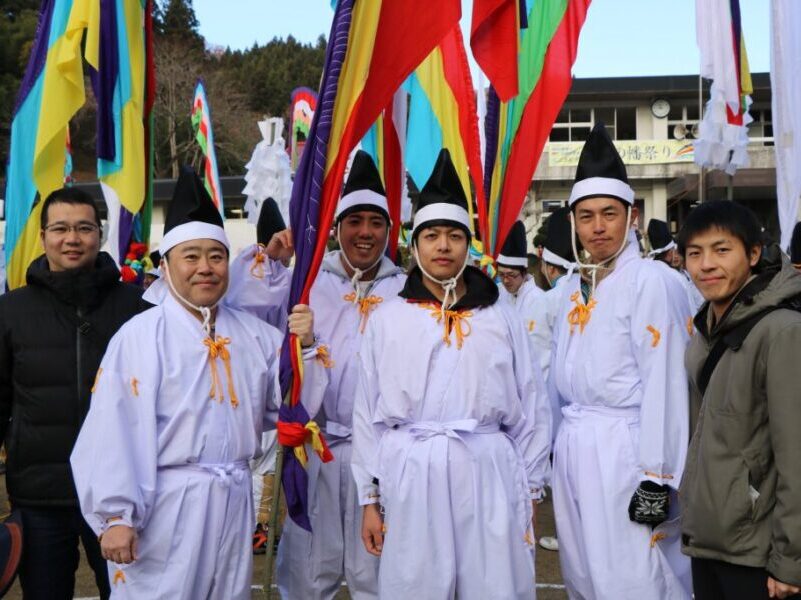
The sounds of conch shells and drums echo through the mountain valley as colorful banners move against the winter sky. Walking in the same clothing and carrying the same banners as the people you prepared with the day before creates a sense of belonging that cannot be experienced by simply watching the festival.
Observe Tainai Kuguri, a Local Coming-of-Age Ritual
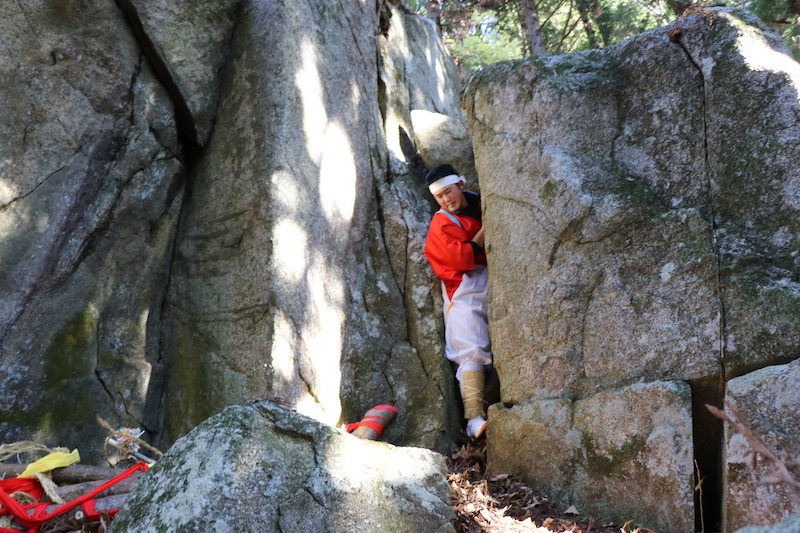
Along the procession route, shortly before reaching Hayama Shrine, a traditional coming-of-age ritual called tainai kuguri takes place.
Young local men joining the festival for the first time that year are known as gondachi. They wear special clothing prepared by their mothers or other family members. After taking part in a traditional exchange of words before the rocks, they pass through a narrow opening between them and are formally recognized as adult members of the community.
You will observe this local ritual from nearby. Guests do not take part in tainai kuguri. It offers a rare opportunity to see how the festival serves not only as a religious celebration, but also as a place where local traditions are passed from one generation to the next.
Arrive at Okitsushima Shrine and Join the Banzai Cheers
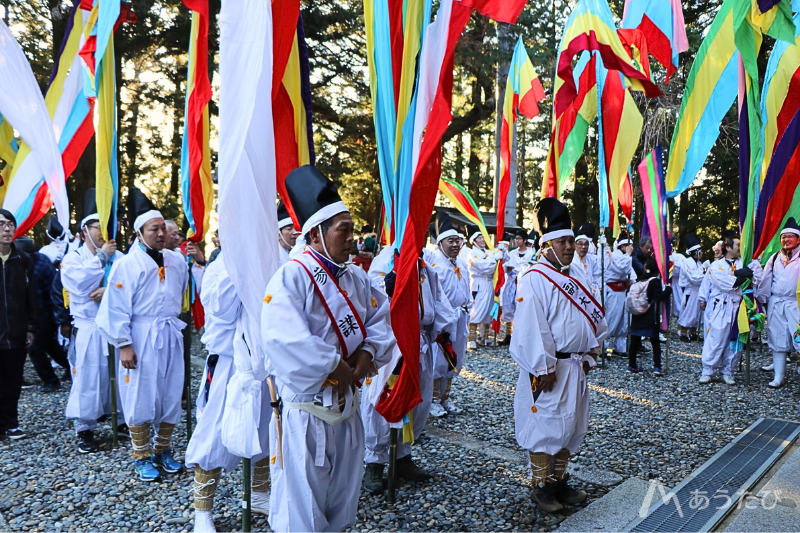
The banner procession arrives at Okitsushima Shrine on Mount Kohata. Colorful banners fill the shrine grounds, and everyone celebrates the safe completion of the procession with banzai sansho, raising their arms and calling “Banzai!” three times together.
The journey began with making banners the day before, followed by mizugori in the winter cold, naorai around a shared table, and an approximately 5-kilometer walk carrying the banners. It is not an easy experience from beginning to end, but that is what makes arriving at the shrine feel so rewarding.
After spending two days together, the local people are no longer simply the hosts who introduced you to their festival. They are the people who walked beside you, carried the same banners, and worked with you to bring the festival to life.
13:00 | A Final Naorai with the Community
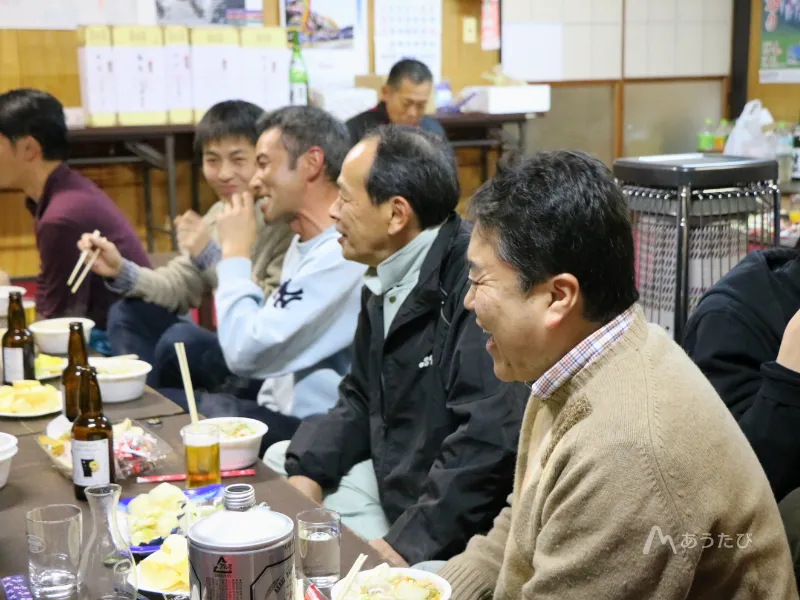
After the festival, you will gather once more with members of the dosha for a final naorai meal.
The people you may have spoken with a little nervously the night before will now feel much more familiar. After preparing the banners, sharing the mizugori tradition, and walking the mountain route together, everyone can relax around the table and look back on the festival over food and drinks.
This final KANPAI is more than a toast to the end of the festival. It celebrates the time you shared and the connections formed over two days. As local residents say, “Thank you for joining us” and “Come back again next year,” the journey comes to a close. The next time you visit Kohata, it may no longer feel like a place you are visiting for the first time.
Language Support
An English-speaking guide will accompany the group throughout this two-day journey.
Local residents generally communicate in Japanese, but your guide will provide interpretation and communication support as needed. They will help you join conversations, understand the festival traditions, and take part with confidence.
Schedule
Day1
| Time | Activity |
|---|---|
| 13:30 | Meet at Nihonmatsu Station Meet your English-speaking guide at Nihonmatsu Station. From there, the group will travel together to the Kohata district. Transportation from the station is included. Please have lunch before meeting at Nihonmatsu Station. |
| 14:00 | Join the Festival Preparations Work alongside members of the local dosha, the community group responsible for organizing the festival. Help cut bamboo and prepare the banners that will be carried the following day. |
| 16:00 | Prepare for Mizugori Male guests who choose to participate will change into a traditional loincloth called a fundoshi and receive instructions about the ritual and safety precautions. Participants may also be offered omiki, sacred sake presented to the deities, but drinking is entirely optional. Female guests may observe the ritual but do not participate. |
| 17:00 | Mizugori Purification Ritual Male guests who choose to participate will warm up with light exercises before pouring cold water over themselves while wearing a fundoshi. Under local guidance, the water is traditionally poured 13, 17, or 23 times, always an odd number. Female guests will observe the ritual. |
| 19:00 | Join the Community Naorai Gather with members of the dosha for naorai, a traditional communal meal held after a sacred ritual. Enjoy home-style local dishes, Fukushima sake, and conversation around the table. Drinking alcohol is entirely optional. |
| 21:00 | Transfer to the Local Farmstay After the naorai, travel by vehicle to a small farmstay in the Kohata district. Settle in and spend a relaxed evening with the farmstay hosts and your fellow guests. Accommodation is in shared rooms separated by gender. |
Day2
| Time | Activity |
|---|---|
| 07:30 | Breakfast and Festival Preparations After breakfast at the farmstay, change into the same white festival clothing worn by members of the local community. Then travel to the former Kohata Daiichi Elementary School and rejoin the dosha you prepared with the day before. |
| 08:00 | The Kohata Banner Festival Begins The festival begins with a departure ceremony, including a purification ritual, greetings from the festival leader, an address from the shrine priest, and remarks from invited guests. After the ceremony, each dosha community sets out carrying its handmade banner toward Okitsushima Shrine. Banner Procession Walk with members of the dosha toward Okitsushima Shrine on Mount Kohata, passing Hayama Shrine along the way. The route is approximately 5 kilometers (3.1 miles) and takes about three hours. It includes paved roads, slopes, and mountain paths. The banners weigh approximately 10 to 15 kilograms (22 to 33 pounds), but they are carried in turns. You can pass the banner to another member of the group and take a break whenever needed. Sacred sake may be offered along the route, but drinking alcohol is entirely optional. Observe Tainai Kuguri Near Hayama Shrine, observe tainai kuguri, a traditional coming-of-age ritual for young local men joining the festival for the first time. Guests observe this ritual but do not participate. Arrival at Okitsushima Shrine After arriving at Okitsushima Shrine, join the community in celebrating the safe completion of the procession with three banzai cheers. |
| 13:00 | Final Naorai with the Community Gather with members of the dosha for a final naorai meal. Share food and drinks while looking back on the festival with the people who prepared and walked alongside you. Drinking alcohol is entirely optional. |
| 15:00 | Return to Nihonmatsu Station After the final naorai, travel by vehicle to Nihonmatsu Station. The journey concludes upon arrival at the station. Times and activities may change depending on festival proceedings, weather, and local conditions. |
Travel Details(Terms&Conditions)
| Availability | December 5–6, 2026 (2 days / 1 night) |
|---|---|
| Price | ¥59,800–¥109,800 per person, based on the number of guests included in the same booking. 1 guest: ¥109,800 2 guests: ¥74,800 per person 3 guests: ¥64,800 per person 4–6 guests: ¥59,800 per person Each booking is priced separately. The price will not change if other guests join the tour. The price includes English-speaking support throughout the two-day journey. |
| Journey Style | Fixed-date small-group journey 2 days / 1 night December 5–6, 2026 1–6 guests |
| Accommodation | A small farmstay in the Kohata district. Guest rooms are shared and separated by gender; private rooms are generally not available. Bathrooms, showers, and toilets are shared with other guests. Bath towels, face towels, shampoo, body soap, and a hair dryer are provided. |
| What’s Included | – One night at a local farmstay – Meals: Day 1 dinner at the naorai gathering, Day 2 breakfast, and Day 2 lunch at the final naorai gathering – Festival preparation and participation – Two naorai gatherings – Local transportation during the journey – Transfers from and back to Nihonmatsu Station – An English-speaking guide throughout the two-day journey – Domestic travel insurance |
| Not Included | – Transportation to and from Nihonmatsu Station – Lunch on Day 1 – Personal expenses – Additional drinks other than those served during the scheduled gatherings |
| Meeting & End Point | Meet at Nihonmatsu Station at 1:30 PM on December 5. After the program on December 6, transportation back to Nihonmatsu Station will be provided. |
| Access from Tokyo | From Tokyo Station, take the Tohoku Shinkansen to Koriyama Station, then transfer to the JR Tohoku Main Line for Nihonmatsu Station. The total journey takes approximately two hours. Rail transportation to and from Nihonmatsu Station is not included in the tour price. |
| Language Support | An English-speaking guide will accompany the group throughout the two-day journey. Local residents generally communicate in Japanese, but your guide will provide interpretation and communication support as needed. |
| Booking & Payment | Booking deadline: November 20, 2026, or earlier if the journey reaches capacity. Payment by credit card (Visa or Mastercard). Detailed payment instructions will be sent by email after booking. |
| Cancellation Policy | ● 20–8 days before departure: 20% of the total tour price ● 7–2 days before departure: 30% ● 1 day before departure: 40% ● On the departure date: 50% After the journey begins or in case of no-show: 100% Please review our Standard Terms and Conditions of Travel and Tour Conditions before booking. |
| Physical Requirements | The festival procession involves approximately 5 kilometers (3.1 miles) of walking on paved roads, slopes, and mountain paths. Banners weigh approximately 10 to 15 kilograms (22 to 33 pounds) and are carried in turns with local community members. You may participate at a pace that suits your fitness level. |
| Clothing & What to Bring | Please prepare for winter outdoor conditions. Temperatures may fall below freezing, and rain or snow is possible. Bring warm layers, a winter coat, gloves, a warm hat, and waterproof walking shoes with good grip. On Day 2, warm, close-fitting base layers in white, beige, light gray, or another neutral color are recommended under the white festival clothing. Please also bring sleepwear, a toothbrush, a change of clothes, personal medication, and other overnight essentials. |
| Mizugori & Observers | Mizugori is an optional outdoor cold-water purification ritual for male guests. Female guests and other non-participating guests may observe. Observers go outside only shortly before the ritual begins and walk a short distance to the outdoor site. There is no heated waiting area at the ritual site, and observers do not have a formal role in the ceremony. Please dress warmly. Guests with health concerns or sensitivity to cold should not participate in mizugori. |
| Festival Customs & Sake | Tainai kuguri is a local coming-of-age ritual and is for observation only. Sacred sake and local sake may be offered during the festival, but drinking is entirely optional. Guests who will be driving must not consume alcohol. |
| Weather, Dietary Needs & Photography | The festival is generally held in rain or snow. In severe weather, parts of the itinerary may be changed or cancelled. Vegetarian meals, food allergies, and other dietary requirements are handled upon consultation, but not every request can be guaranteed. Photography is generally permitted; please follow any instructions given by local residents, shrine representatives, or your guide. |
Meet Your Host
Want to learn more about your host?
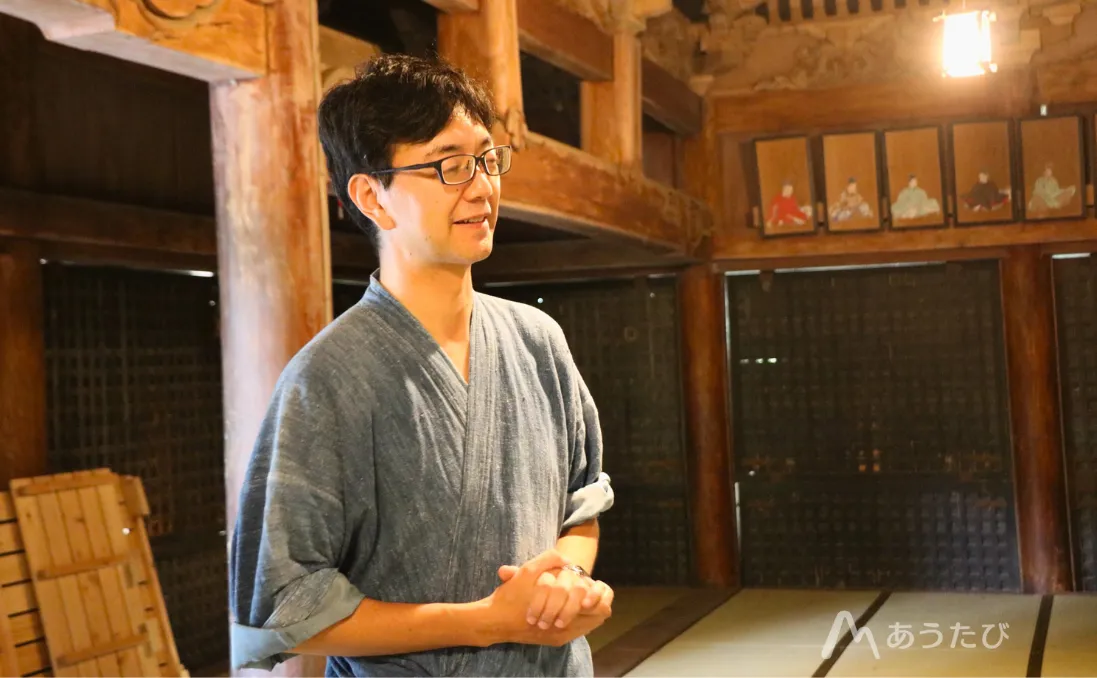
Discover the story of the Shinto priest and his role in preserving local traditions.