Nagomian Farm Restaurant
Chie Kanno
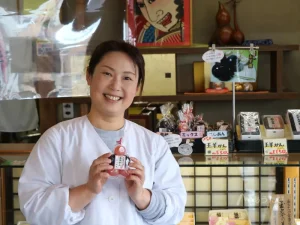
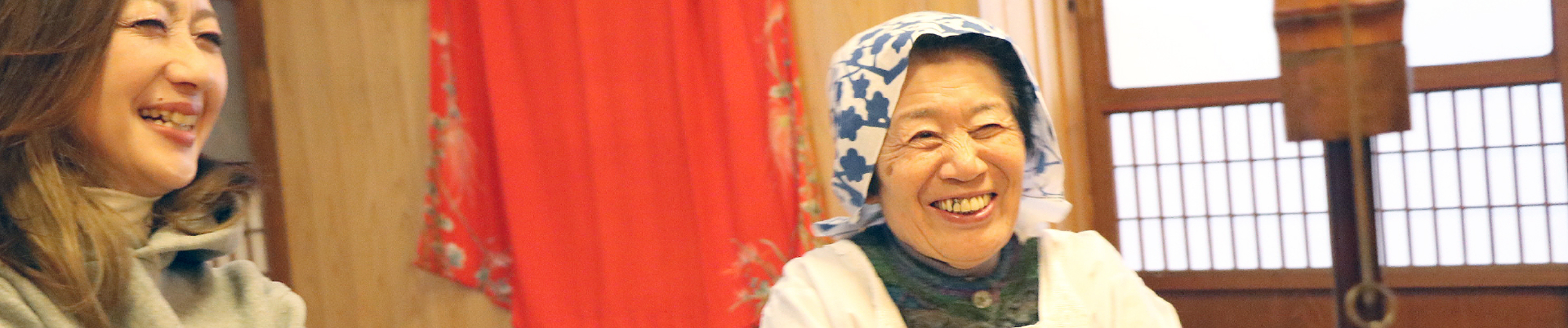
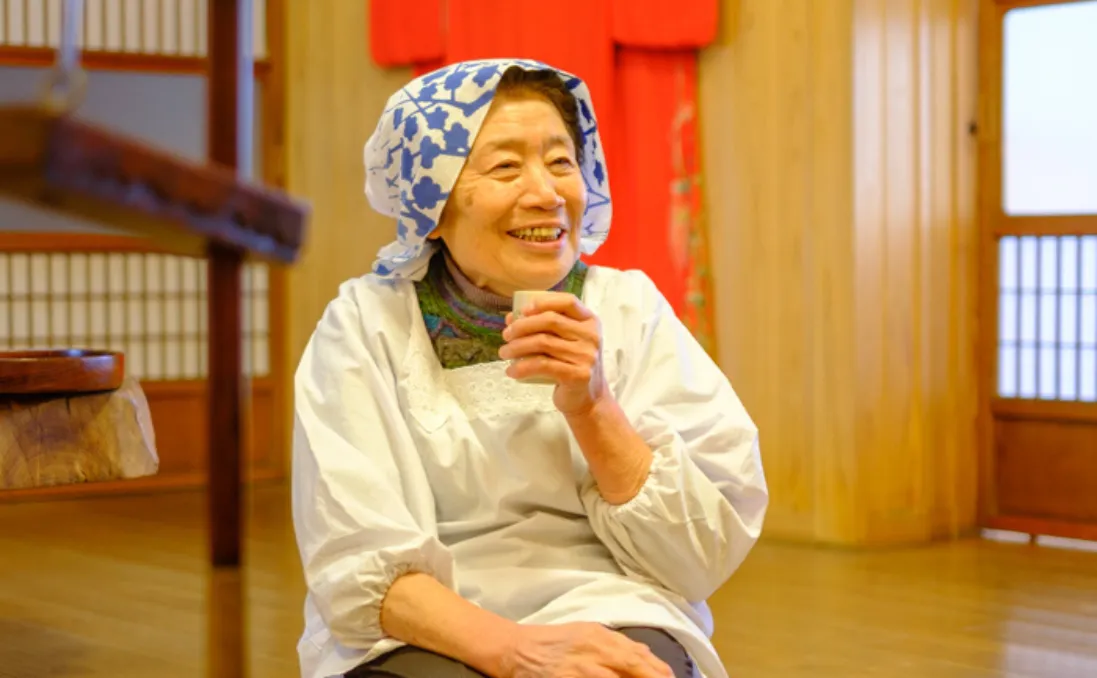
With her gentle Okitama dialect and warm smile, Chie welcomes every visitor like family. She feels like the very image of rural Yamagata — almost as if she had stepped out of the Showa era.
From spring through autumn, she is busy with cherry cultivation, rice farming, and other agricultural work. In winter, she prepares for the next season and makes miso, keeping just as busy.
Alongside all of that, she also runs a farm restaurant, where she continues to welcome and delight guests from near and far.
A Life Rooted in Family and Farming
Chie Kanno was born in January 1947 in Shirataka Town, Yamagata. Because her mother was in poor health, she was born prematurely at only eight months.
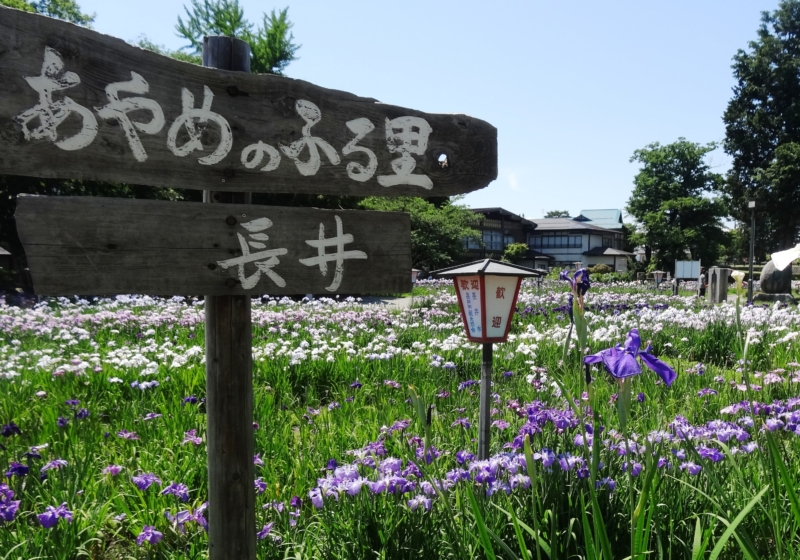
At the age of 21, on the day of Tanabata, Japan’s traditional star festival, she was introduced to a local man through an arranged meeting. Their first date was at Ayame Park in Nagai.
The following spring, she married and moved into her husband’s family home in Nagai, where she still lives today.
Building a Life in a Large Farming Household
In her new home, Chie began life in a large household that included her parents-in-law, her husband’s grandmother, known in Yamagata dialect as “obanchan,” and the couple themselves.
At the time, people often spoke of building a “seven-digit farming income,” but in reality, many farming households earned less than one million yen a year. Daily wages of 1,300 yen were not unusual.
Working Through Changing Times
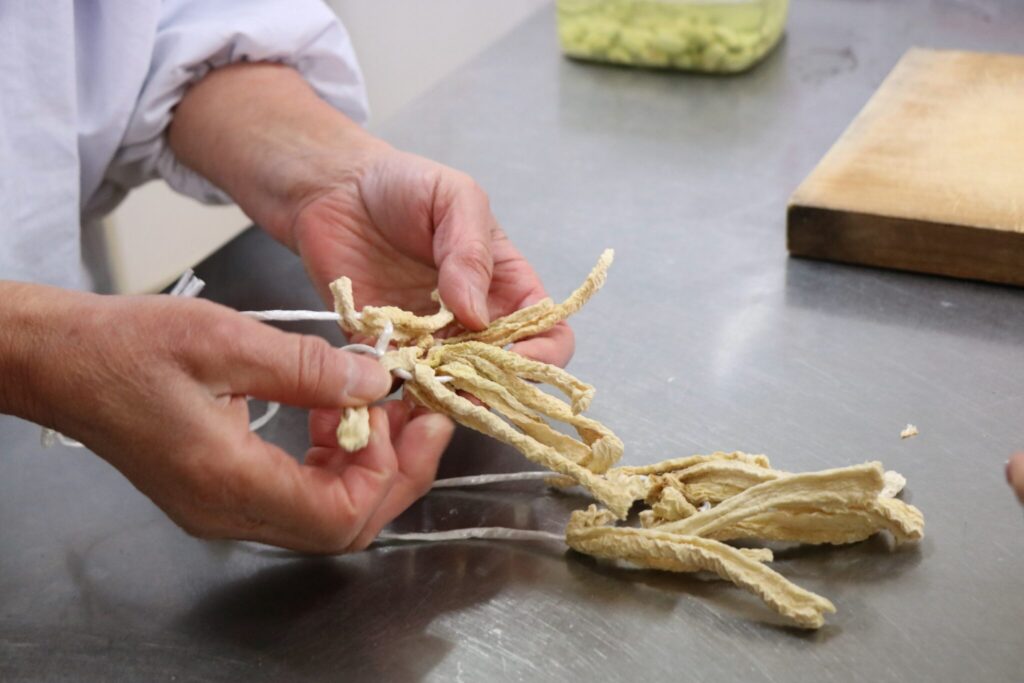
During those years, the Kanno family began raising pigs. Later, in 1974, they purchased forestland in Shirataka to begin cultivating shiitake mushrooms on logs.
The entire family worked together to cut the logs in the mountains and carry them home.
Looking back, Chie says, “Before cheap imported shiitake started coming in, it was actually a fairly good source of income.”
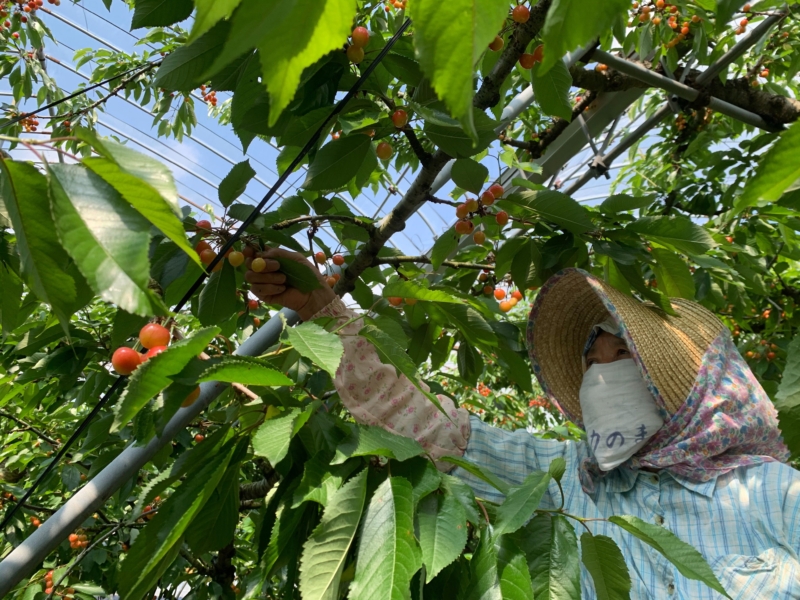
As the Showa era gave way to Heisei, the family tried growing apricots, but the attempt did not succeed.
They then switched to cherries. Seven years after planting the young trees, they finally had their first harvest.
Chie says she still remembers the taste of those first cherries.
Now, in the Reiwa era, she mainly focuses on rice farming and cherry cultivation. After raising three children and devoting herself fully to family and farm life, she now speaks happily about her son taking over the farm in the coming season.
From Community Work to a New Dream
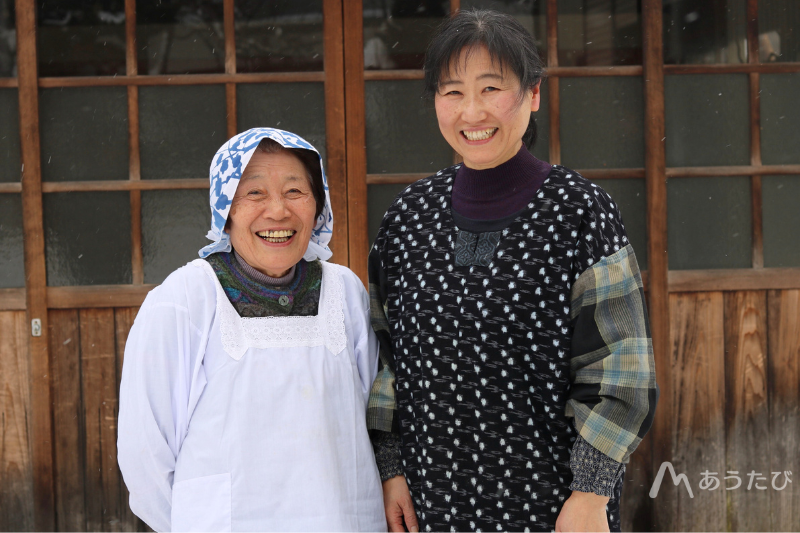
At first, Chie began a small local business with women from the neighborhood under the name “Sumomo no Ki,” producing and selling side dishes and processed foods.
However, daily life was so busy that they struggled to keep the project going, and it gradually became inactive.
Around that time, Chie discovered green tourism — a form of travel in which urban residents stay in rural areas and enjoy nature, culture, and交流 with local people.
She immediately felt, “This is exactly what I want to do.” From then on, she began seriously preparing to open a farm restaurant.
An Unexpected Partnership
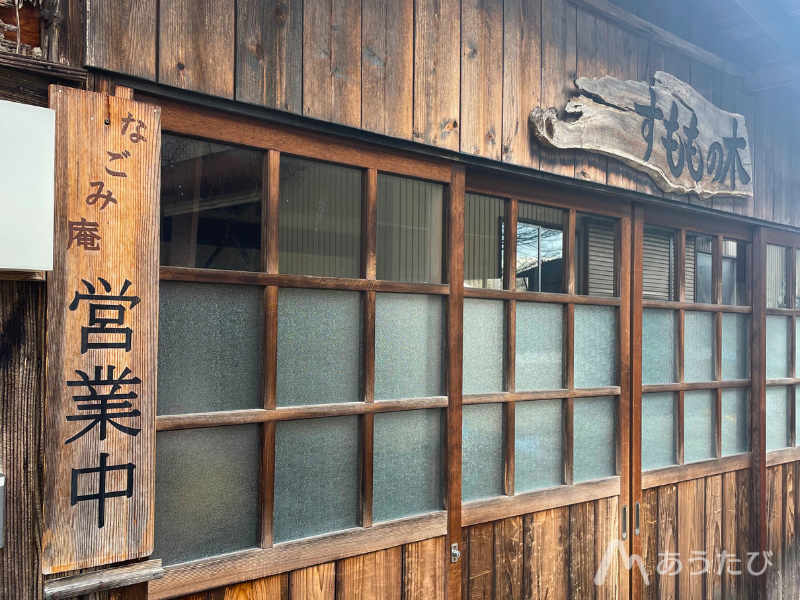
While she was making preparations, she had an unexpected encounter.
Mr. Takahashi, who had been visiting the area for a national agricultural statistics survey, learned about her plans and said, “I want to work here with you.”
At first, Chie turned him down, saying she could not offer enough salary. But in the end, she was moved by his enthusiasm and decided to start the business together.
Opening Nagomian
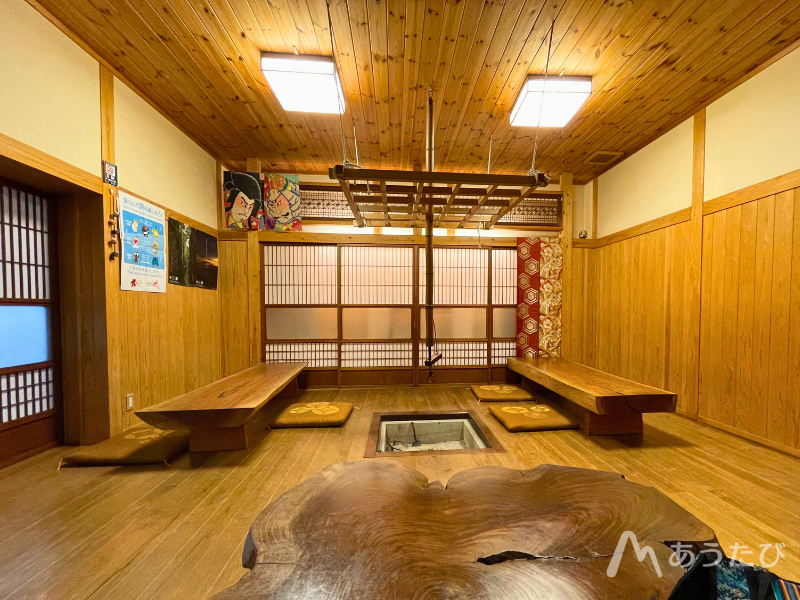
On December 25, 2007, when Chie was 60 years old, Nagomian finally opened.
From the beginning, the restaurant drew attention. Visitors came not only from within Yamagata but also from outside the prefecture.
It eventually became so well known that it was featured on JR posters.
A Place That Brings Comfort
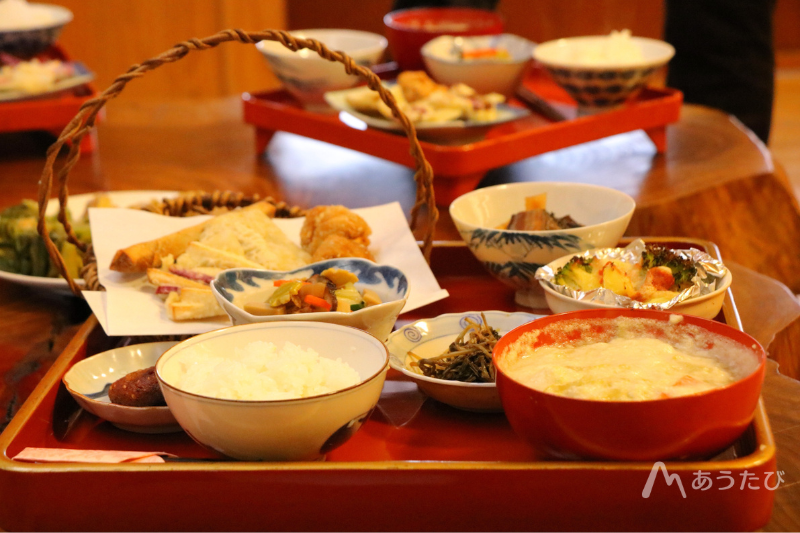
The reason Nagomian attracts so many people lies in both Chie’s warm personality and the food she serves.
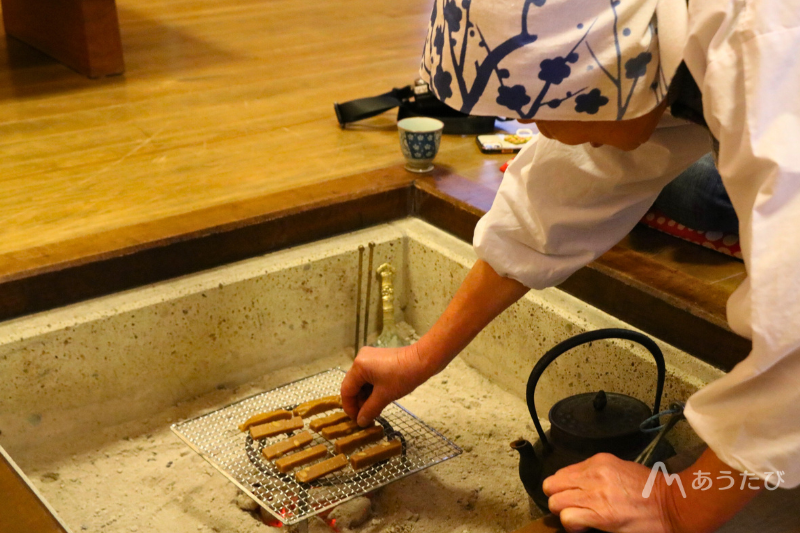
Her gentle countryside lunches, made without meat, are especially loved by guests.
Nagomian is more than just a restaurant. It is a special place filled with Chie’s dream and the charm of the local region.
Through farming and cooking, she continues to connect urban and rural life, offering comfort and joy to all who visit. True to its name, Nagomian has become a place that brings peace to the heart.
Reading her story is just the beginning.
Visit Nagomi-an, share a meal, and experience the warmth of rural Japan.