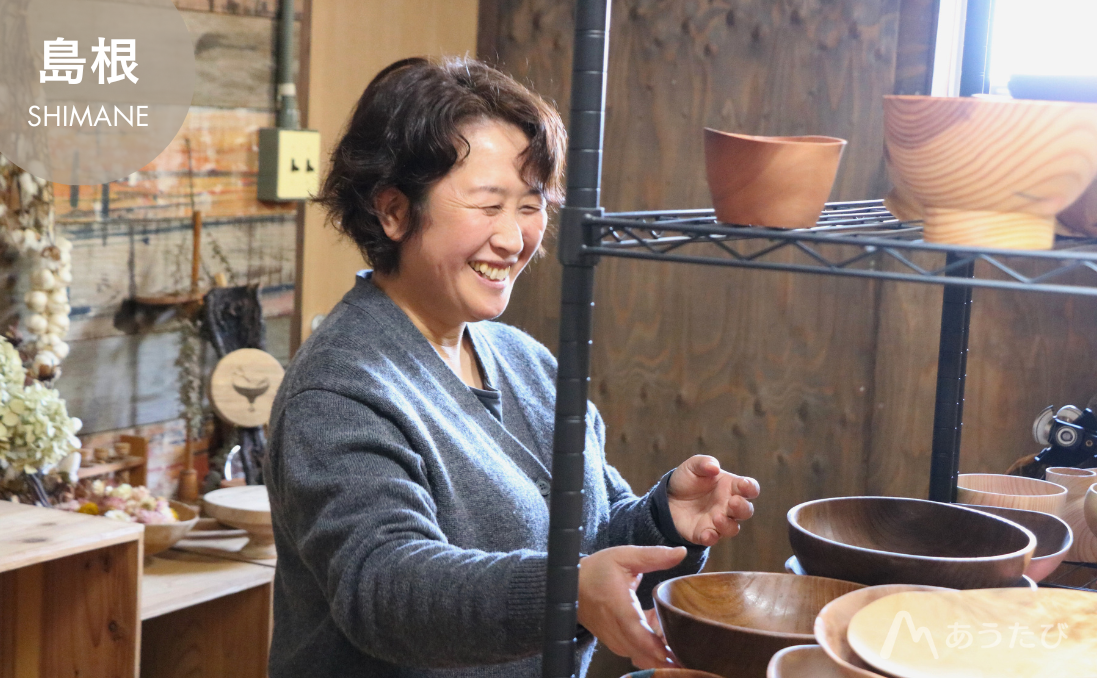
Create a One-of-a-Kind Wooden Bowl
Discover the joy of craftsmanship through an unforgettable woodworking experience centered on the Japanese idea of mottainai — a cultural value that encourages making the most of what already exists rather than wasting it.
Have you ever heard of green wood turning? In conventional woodturning, wood is fully dried before being shaped on a lathe. In contrast, green wood turning uses freshly cut wood that is shaped while still wet. As the wood dries, it naturally warps and shifts, giving each finished piece a distinctive character.
During this experience, you will create your own wooden bowl using this unique technique. Because specialized tools are used, this is a rare opportunity that most people never get to try. Along the way, you will also learn about the host’s personal philosophy on life and craftsmanship, making the experience both creative and reflective.
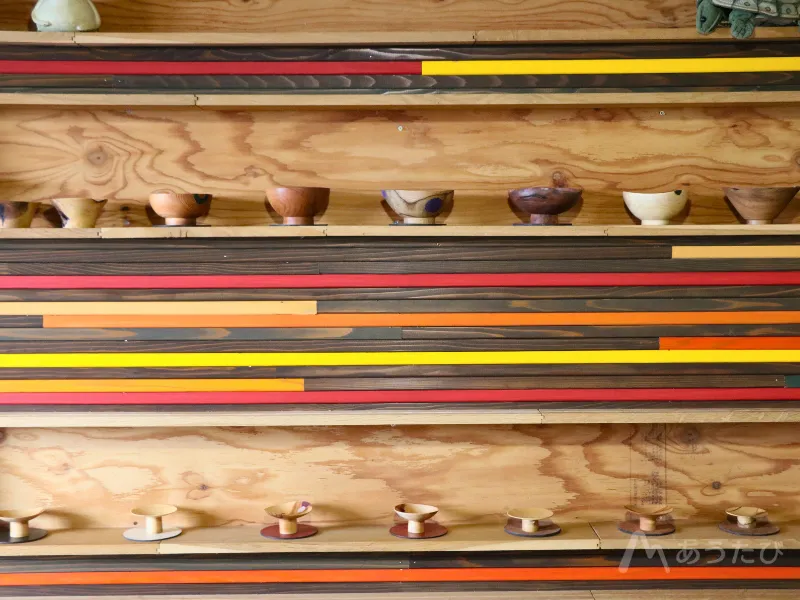
Experience Highlights
- Create your own wooden bowl using the green wood turning method
Work with fresh wood on a wood lathe and shape a one-of-a-kind bowl. - Learn directly from a local artisan
Meet Keiko Oishi of Umikaze Workshop and discover her sustainable craftsmanship philosophy. - Experience the beauty of natural wood
Watch how freshly carved wood naturally transforms as it dries, creating unique shapes and textures. - Stay overnight and enjoy a small-group experience
Spend two relaxed days at the workshop with a maximum of two participants. - Receive your finished bowl at home
After several months of drying and finishing, your completed bowl will be shipped to your home.
Meet your Host
Keiko Oishi, Umikaze Workshop
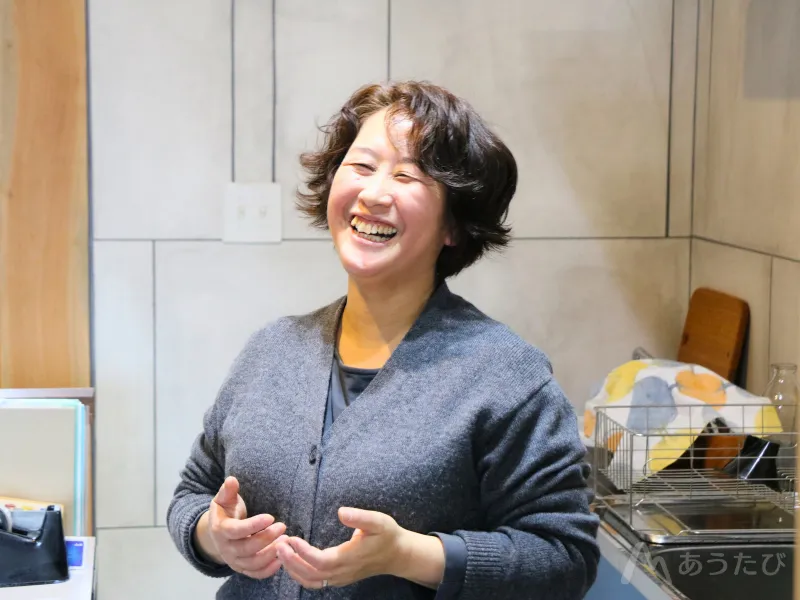
Born in 1974 and originally from Fushimi in Kyoto, Keiko Oishi followed a very different path before becoming a woodworker. After working at a traditional kimono shop and later in resin molding manufacturing, she relocated to Shimane Prefecture.
Her encounter with woodworking came in 2020 through a local workshop, where she first discovered bowl-making with a wood lathe. That experience inspired her to begin creating her own work.
At Umikaze Workshop, Oishi creates pieces from wood generously given to her by local residents. Rather than rejecting imperfections, she embraces the natural warping, knots, and cracks that appear during drying. Broken areas may be repaired using washi, traditional Japanese paper, giving each piece warmth and individuality. Her work reflects a clear philosophy: do not discard materials, but bring out their potential. The result is a collection of pieces that preserve the natural beauty and personality of the wood itself.
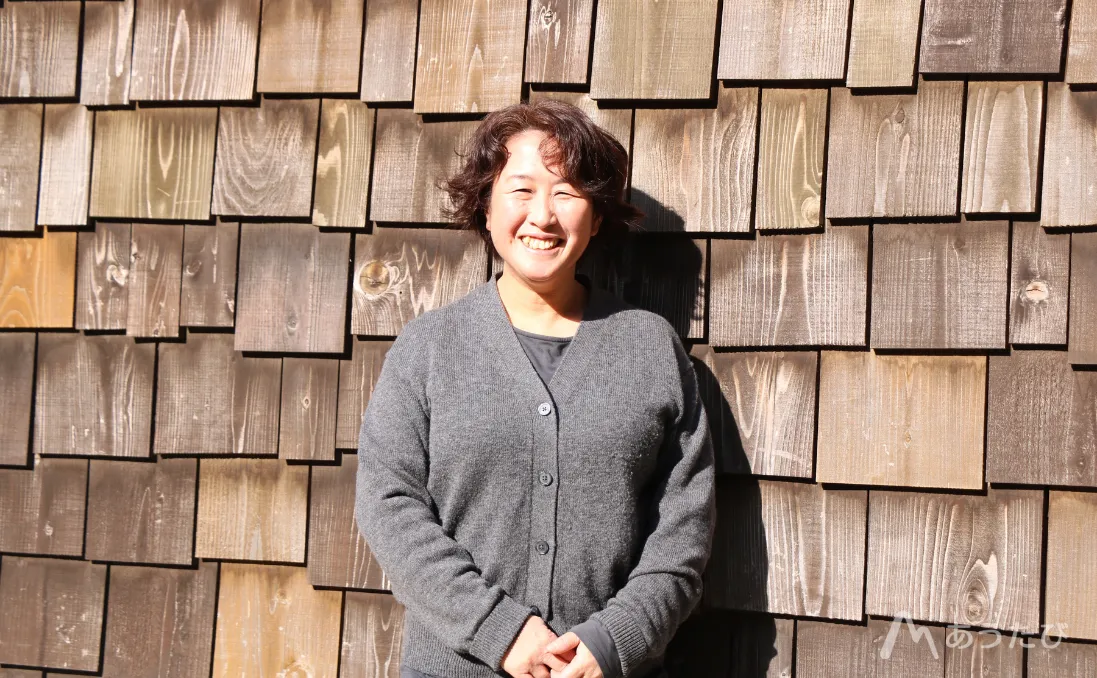
Umikaze Workshop
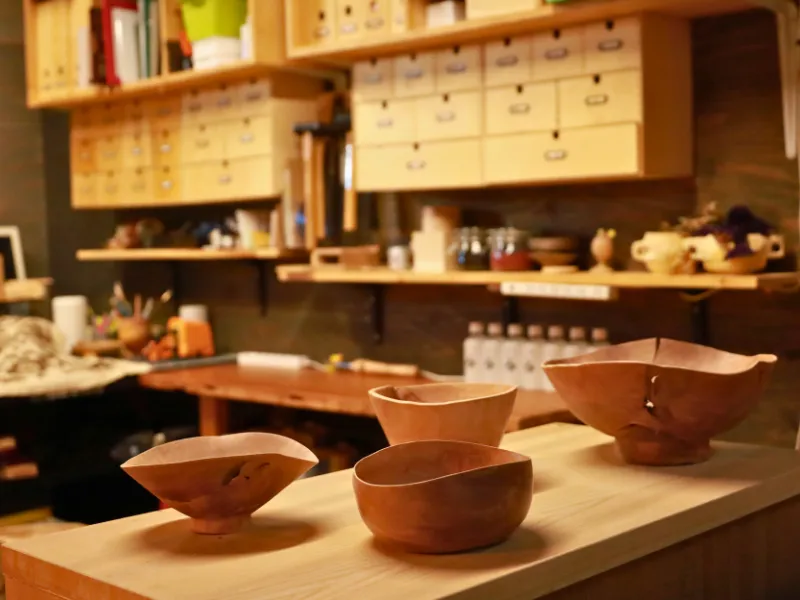
Founded by Keiko Oishi and her husband, Umikaze Workshop celebrates the beauty of imperfection.Instead of aiming for perfect symmetry, the workshop embraces the marks of nature and time. Cracks that form during drying are sometimes repaired with washi paper, creating textures that feel like living traces of the wood’s story.
By breathing new life into scrap wood and irregular timber that would otherwise go unused, the workshop expresses both creativity and kindness toward natural resources. Each piece carries a distinctive charm that cannot be replicated.
What Is Green Wood Turning?
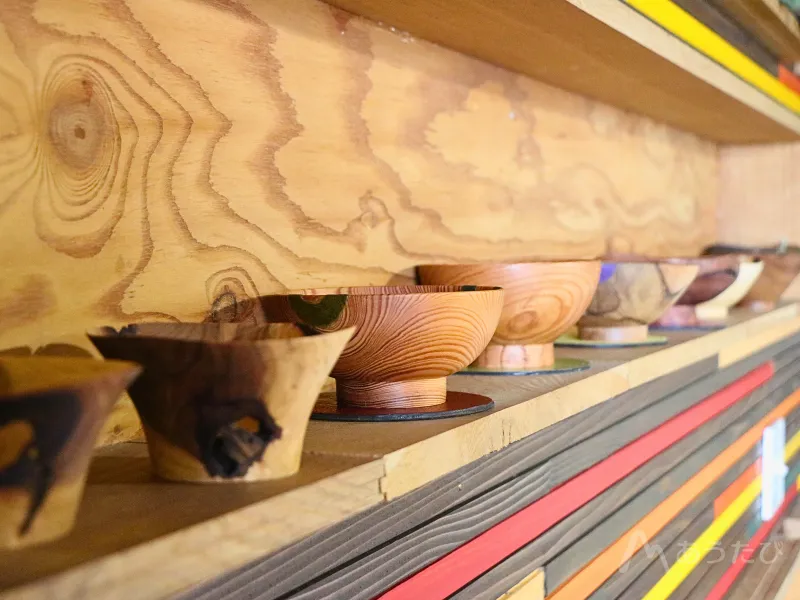
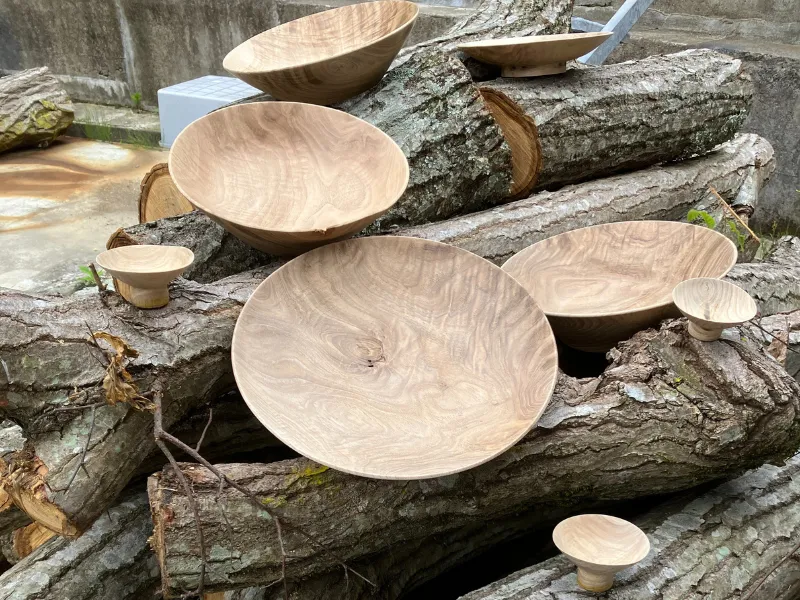
Green wood turning is a woodworking technique believed to have originated in Europe and North America. Unlike conventional woodturning, which uses dried lumber to produce perfectly round vessels, green wood turning uses freshly cut wood. The wood is mounted on a wood lathe (a rotating machine similar to a pottery wheel), where it is carefully shaped with special carving tools. The piece is then dried.
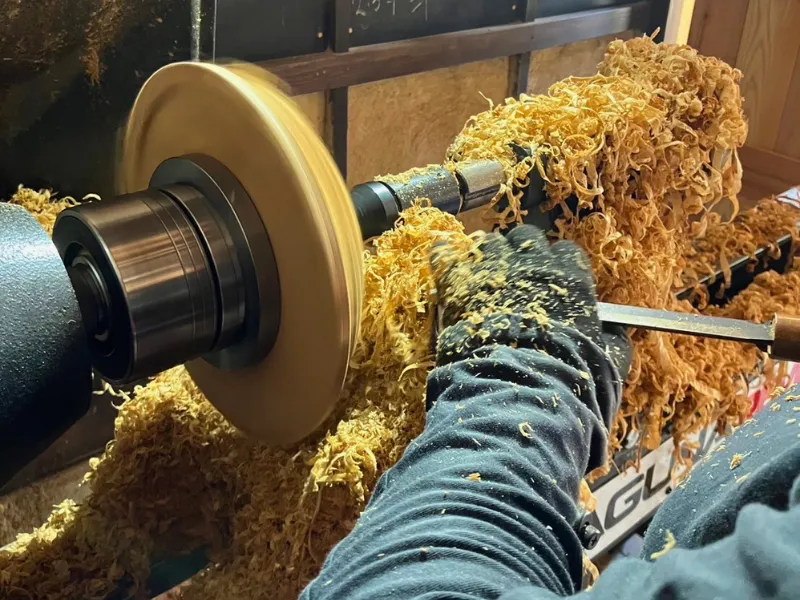
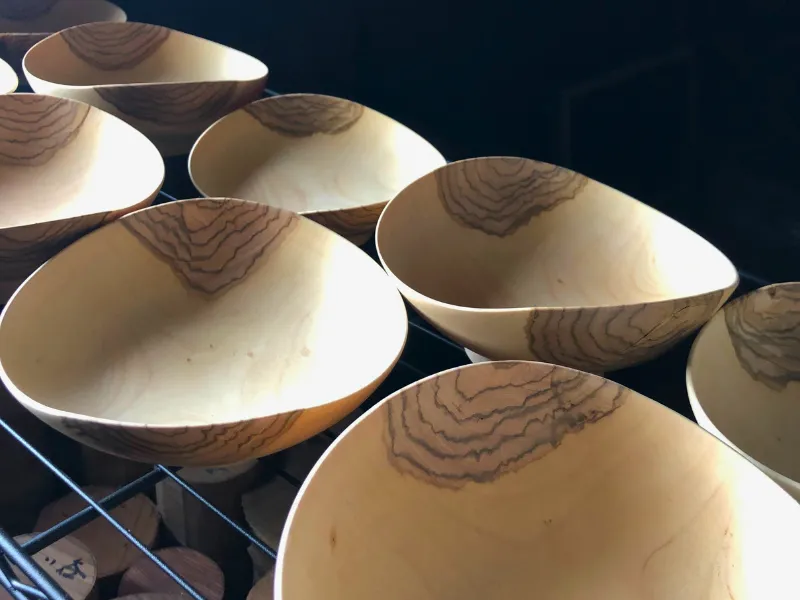
Because the wood is shaped while still wet and thinly carved, it dries relatively quickly. However, this process can cause cracks or warping as moisture leaves the wood. Rather than flaws, these changes create graceful curves and natural lines that give each bowl a unique personality. No two pieces are ever exactly the same.
There are many appealing aspects to green wood turning. The act of carving fresh wood is calming and immersive, engaging both your senses and your focus. The scent of the wood and the tactile feeling of the grain create a deeply immersive experience. Another important feature is sustainability. Because it uses fresh wood, a wide variety of trees can be used in the process. This approach helps make effective use of Japan’s abundant forest resources.
And once your bowl is finished, eating from a vessel you made yourself adds a special sense of satisfaction to everyday meals. The experience offers not only the joy of creativity but also a deeper sense of fulfillment and connection to the environment.
Create Your Own Original Wooden Bowl
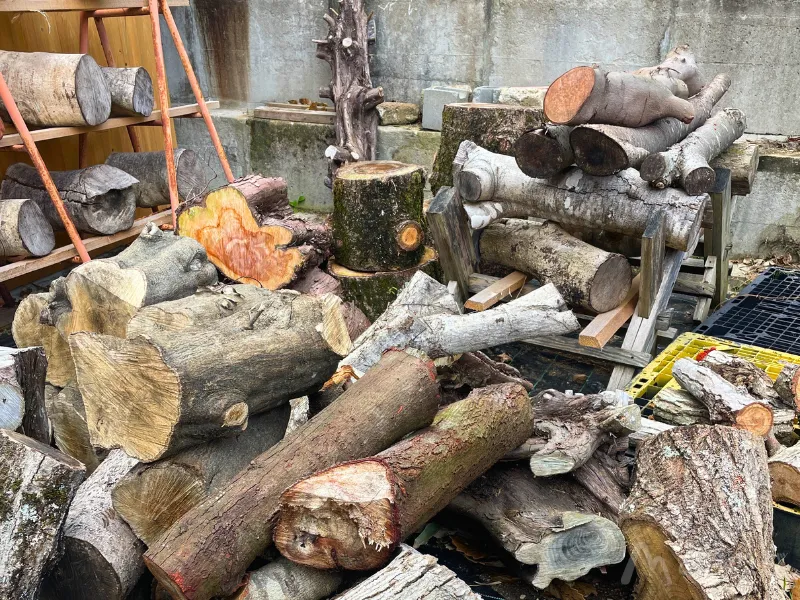
Step 1: Choose Your Log
Begin by selecting a log from a collection prepared at the workshop. Part of the excitement is that the interior of the wood remains a mystery until it is cut open. Together with Oishi, you will discuss the kind of bowl you would like to make and select the best piece of wood.
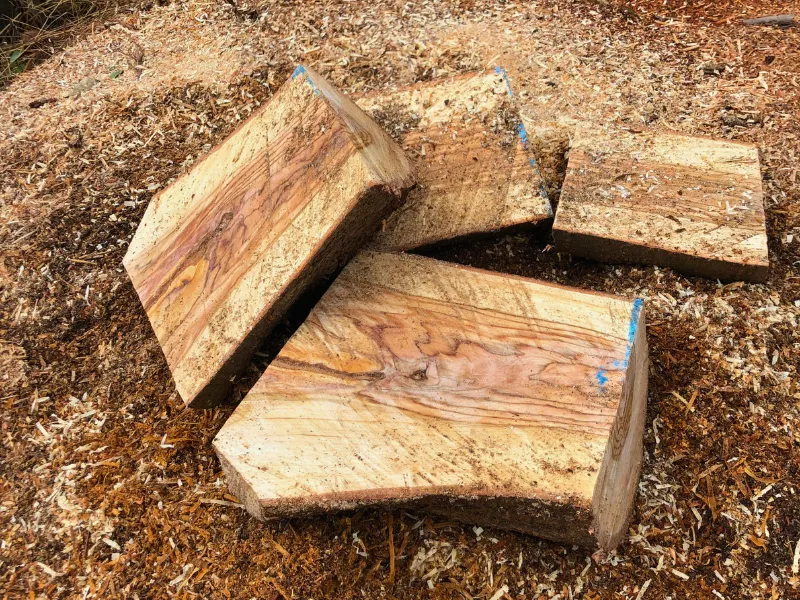
Step 2: Preparing the Wood
The log is cut into a workable size using a chainsaw.
For safety reasons, this step is usually handled by Oishi.
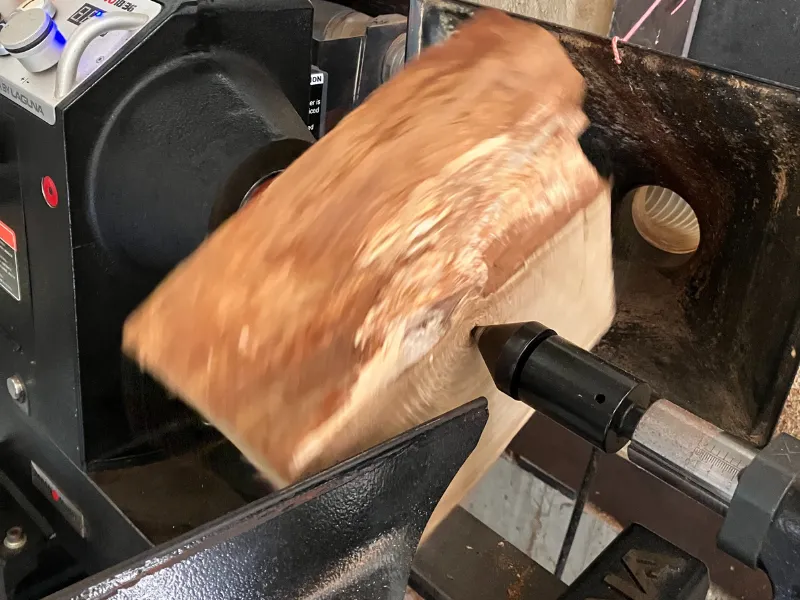
Step 3: Mount the Wood on the Lathe
The wood is attached to a wood lathe, a machine that rotates the wood while it is shaped.
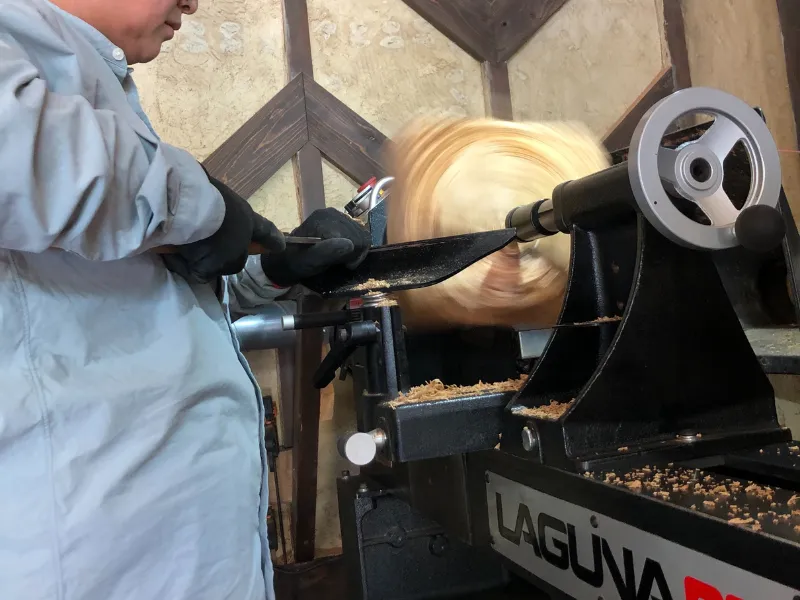
Step 4: Carving the Bowl
Using specialized carving tools, the spinning wood is gradually shaped into a bowl.
Step 5: Sanding
Once the basic shape is complete, the surface is smoothed with sandpaper.
This concludes the hands-on portion of the experience.
Afterward, the bowl enters the drying stage. Drying typically takes several months, depending on the wood species and the bowl’s size. During this time, the wood may naturally change shape. You will receive updates on its transformation via email or LINE.
Finally, you sand the carved bowl with sandpaper to finish the hands-on session. After this, the bowl enters the drying process. Depending on the wood species and bowl size, drying may take several months. Once the moisture is fully gone, it moves to the next stage. Updates about how the bowl changes during drying will be shared via email or LINE.
Final Finishing Process (Handled by the Artisan)
After the bowl has fully dried, Oishi completes several finishing steps:
- Adjusting the shape – correcting distortions caused during drying
- Resin sealing (first coat) – strengthening the wood fibers
- Wet sanding – polishing while rinsing with water
- Repair work – cracks or holes may be repaired or left visible depending on the piece
- Additional polishing
- Resin sealing (second coat) – sometimes repeated depending on the wood
- Pore sealing – a coating that prevents water leakage by sealing the wood’s vessels
- Wet sanding
- Food-safe finishing coat (first layer) – compliant with Japanese food safety regulations
- Wet sanding
- Final finishing coat
- Final wet sanding
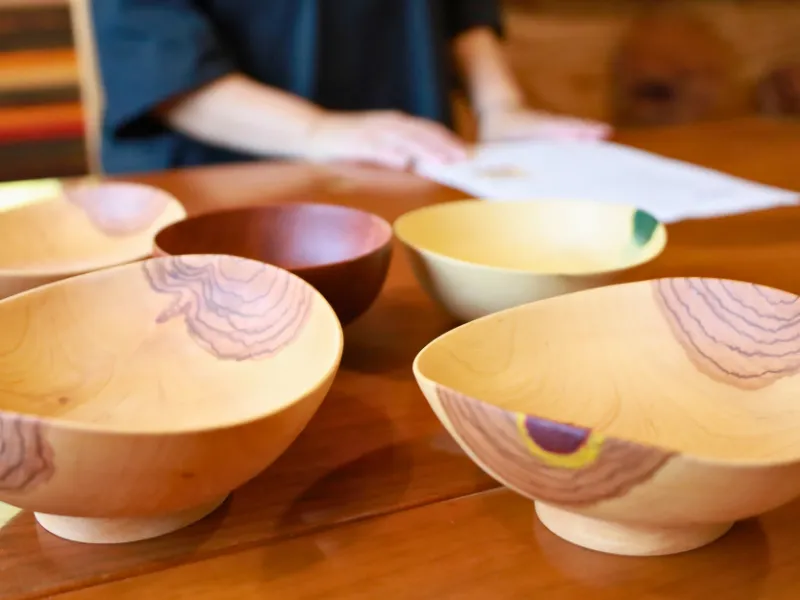
At last, your bowl is complete.
Delivery
Your finished bowl will be carefully shipped to your home by courier once the entire process is complete.
Schedule
Day 1
| Time | Activity | Meals |
|---|---|---|
| 13:00 | Meet at Umikaze Workshop. Welcome from host Keiko Oishi, self-introductions, and an overview of the experience and its purpose. | |
| 13:30 | Introduction to green wood turning. View examples of Oishi’s work, learn about different types of wood and their characteristics, and watch a demonstration. | |
| 15:30 | Preparation for crafting. Select a log from the workshop’s collection. The log is cut into a workable size using a chainsaw. (For your safety, this step is usually handled by the host.) Work proceeds to the next stage depending on the progress. | |
| 17:00 | Check in to the hotel. | |
| 18:30 | Evening gathering at Umikaze Workshop. Enjoy a casual dinner and discussion about the next day’s work. | Dinner |
| 20:00 | End of the day. Return to the hotel and rest. |
Day 2
| Time | Activity | Meals |
|---|---|---|
| 08:00 | Breakfast at the hotel. | Breakfast |
| 09:00 | Meet again at Umikaze Workshop. Mount the wood on the lathe and carve it using specialized tools. Finish by sanding the bowl. The bowl will then begin a drying process that takes several months. Updates on the bowl’s transformation will be sent by email or LINE. | |
| 13:00 | Experience concludes. Thank you for your participation. |
Please note:
- The end time may vary depending on the amount of work completed during the experience.
- Times are approximate and may change depending on workshop progress.
Travel Details
| Availability | Available year-round |
|---|---|
| Price | 88,000 yen per person |
| Included | ・Workshop experience fee ・Shipping of the finished bowl ・Accommodation ・Meals (1 breakfast and 1 dinner) ・Travel insurance |
| Location | Umikaze Workshop 7-13 I, Kibe-cho, Masuda City, Shimane 699-3502, Japan (Google Maps) Accommodation: Noramare |
| Access | 17 minutes by car from Masuda Station 16 minutes on foot from Iwami-Tsuda Station Pick-up may be available upon request. Please consult at the time of booking. |
| Minimum participants | Minimum: 1 person Maximum: 2 people |
| Clothing | Comfortable clothing suitable for light physical activity. |
| What to bring | No special items required. |
| Cancellation policy | ・20 days before the experience: 20% of the total fee ・10 days before the experience: 50% of the total fee ・Same-day cancellation or no-show: 100% of the total fee |
| Booking deadline | Reservations must be made at least 7 days in advance. |
| Payment methods | Credit card (Visa, Mastercard) Detailed payment instructions will be sent by email after booking. |