Fumie Watanabe | Tamaya Gyokushindo
“I never planned to do this at all.”
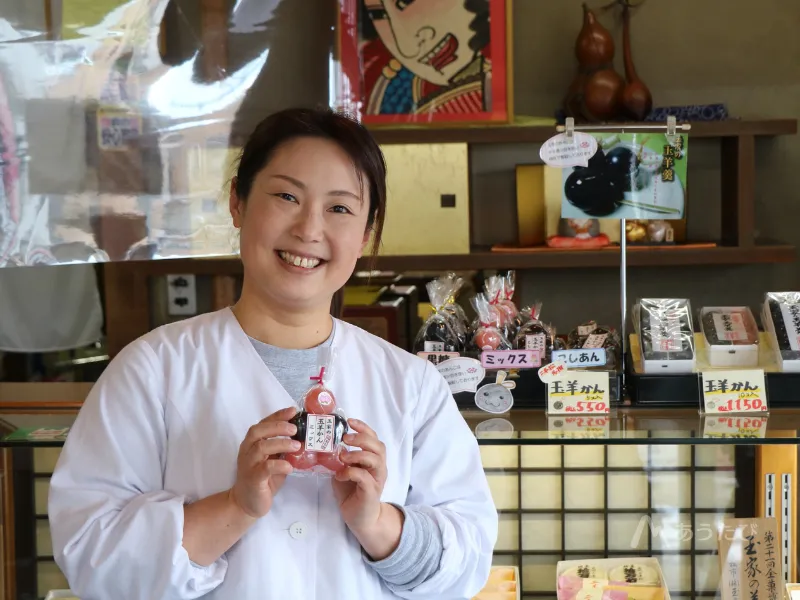
That was Fumie Watanabe’s immediate answer when we asked whether she had always wanted to take over her family’s wagashi shop.
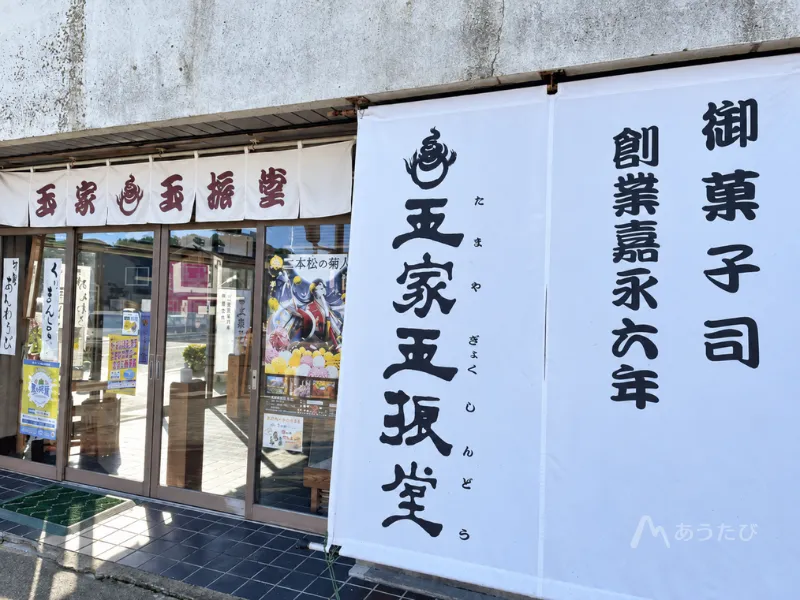
Fumie is the sixth generation of Tamaya Gyokushindo, a long-established confectionery in Nihonmatsu, Fukushima. But growing up, she had no intention of joining the family business. After finishing school, she worked for nearly four years at a care facility in Nihonmatsu, following a completely different path.
“If No One Else Will Do It, I Will.”
Fumie is the eldest of four siblings. At the time, there was still a general expectation that a son would take over the family business, so she assumed one of her younger brothers would eventually run the shop.
Then, in her mid-twenties, her father raised the question of what would happen to the business in the future. If none of the children wanted to continue it, he said, they might have to consider handing it over to someone outside the family.
So the siblings had a family meeting.
“When I asked everyone, ‘Could you do it?’ they were all like, ‘No, no, no,’” Fumie laughs.
One of her brothers said he might be able to make sweets, but running a company was another matter.
So Fumie simply said, “Fine. I’ll do it.”
She says the decision was made so casually that people later joked that the family must have decided the successor by rock-paper-scissors.
Not exactly how you imagine the sixth generation of a traditional confectionery being chosen.
From Care Work to Wagashi Making
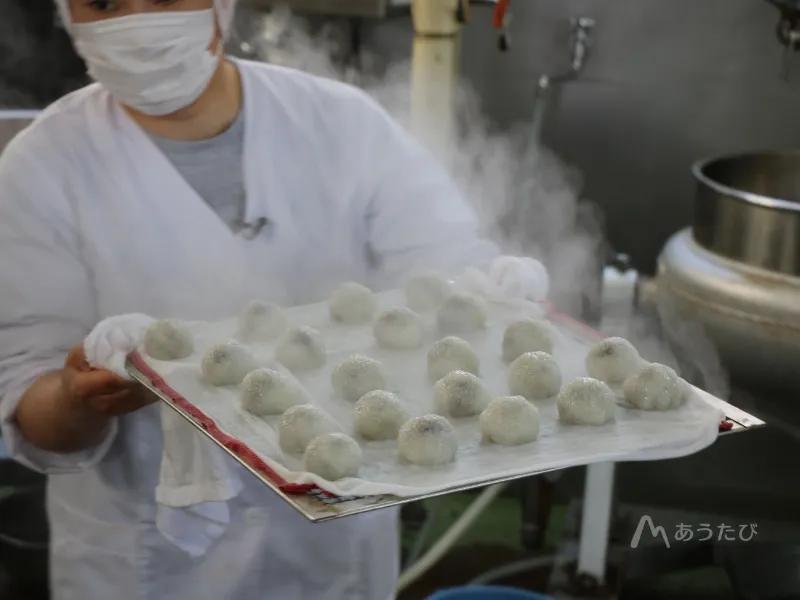
Once Fumie had decided to take over the business, she did not simply step straight into the family shop.
After helping at home for a while, she enrolled in a confectionery school and studied for two years. Even after graduating, she chose not to return immediately to Nihonmatsu. Instead, she moved to Nara and spent about four years training at another wagashi shop.
Why Nara?
“If I stayed too close to home, I knew I’d rely on my family. I thought it would be better to go somewhere far enough away that I couldn’t easily come back.”
Tokyo would have been an option, but Fumie deliberately chose somewhere farther away.
She was already in her late twenties when she began her professional training, and many of the people teaching her were younger than she was.
“That part was difficult,” she says. “I often had to learn from people younger than me.”
But she stayed for four years, learned the craft, and eventually returned to Nihonmatsu.
Making Sweets Is Only Part of Running a Shop
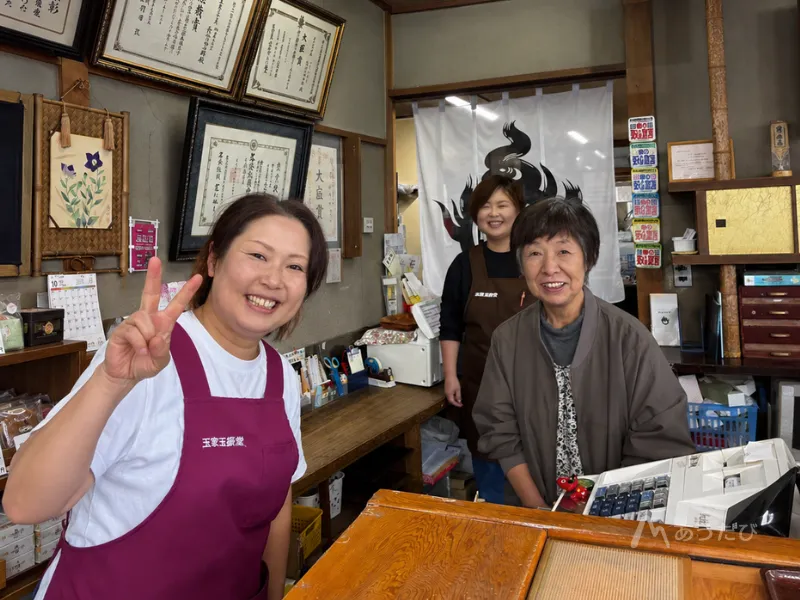
Back home, Fumie quickly discovered that continuing a family business meant much more than making wagashi.
There was purchasing, accounting, daily operations, and the responsibility of keeping the business running.
“Running the company itself was difficult,” she says. “There were a lot of things I had to learn.”
Still, returning home did not feel strange to her.
“I was just coming back to the house where I was born.”
Her father is still officially the company representative, but because of his health, Fumie already handles much of the day-to-day business.
“I think I’ll probably become the representative sometime this fiscal year. I’m still saying I don’t really want to,” she laughs.
People around her already ask, “You’re not the president yet?”
It seems that the work itself has made her the sixth generation before the title has caught up.
Nihonmatsu: A Town of Sweets?
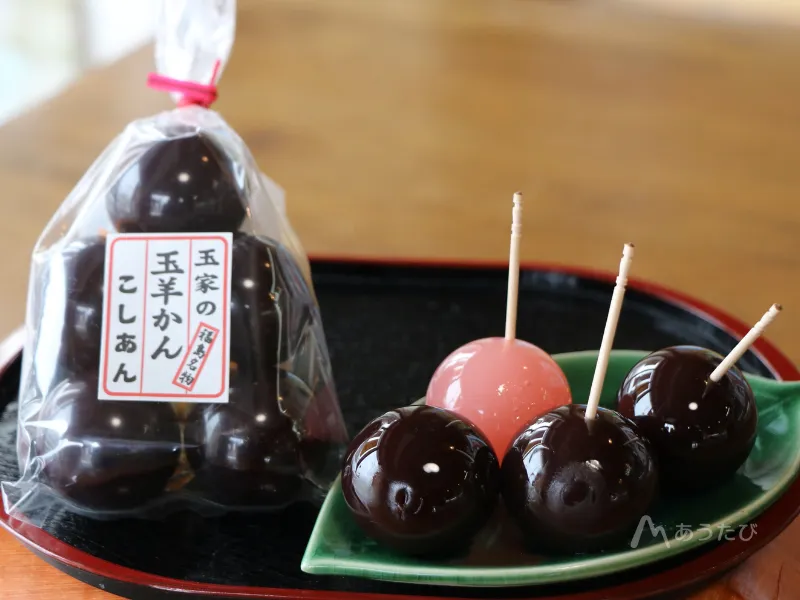
Nihonmatsu still has a surprising number of confectionery shops.
According to Fumie, there are around ten shops with storefronts, and even more if you include smaller producers and businesses that mainly supply other retailers. In the past, there were even more.
There are long-established wagashi shops, Western-style confectioneries, and other local sweet makers throughout the city.
Yet few travelers come to Nihonmatsu thinking of it as a “town of sweets.”
Fumie sees potential in that.
From Buying Sweets to Making Them
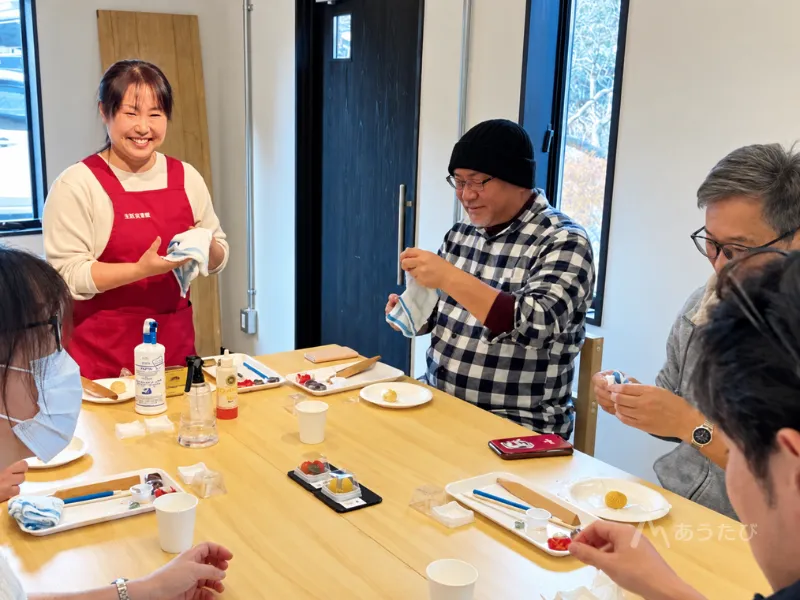
When we asked what she would like to do in the future, one idea came up immediately.
“I’d like to do more hands-on experiences.”
Rather than simply buying wagashi, visitors could make them themselves, learn about the ingredients, and experience a small part of Japanese confectionery culture with their own hands.
Fumie has already led wagashi-making workshops, including nerikiri experiences, and she has taught international visitors with the help of an interpreter.
She would like to welcome more overseas guests in the future.
But there is one practical problem. A working confectionery cannot always respond when someone calls a day or two in advance asking for an experience.
That led Fumie to think beyond her own shop.
“I wonder if we could create experiences across Nihonmatsu as a whole.”
Her idea is simple: different confectionery shops could offer different experiences on set days. One day might be wagashi, another day something completely different. Visitors would know that if they came to Nihonmatsu on a certain day, there would be something they could make, taste, and learn.
A town where sweets are not only something to buy, but something to experience.
“Nihonmatsu, the town of sweets.”
It has a nice ring to it.
What Comes Next for the Sixth Generation
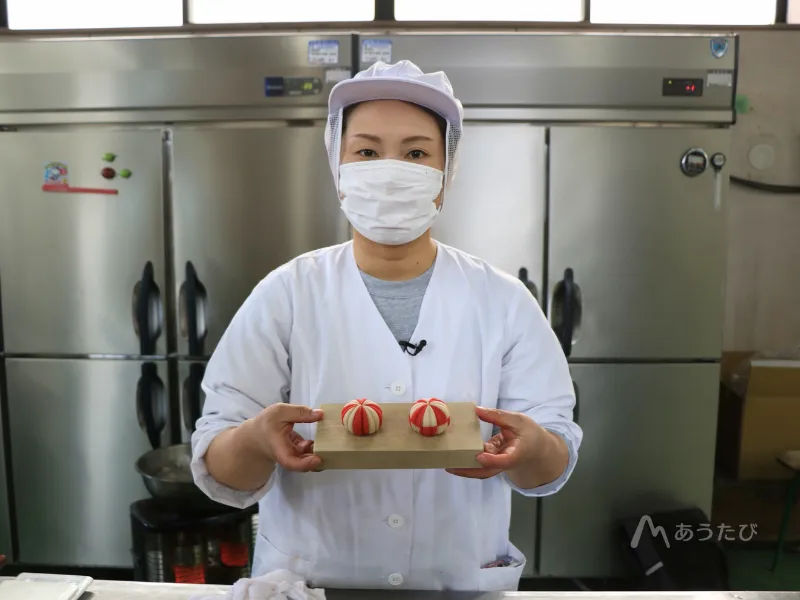
Fumie never planned to become a wagashi maker.
She was working in care when a family meeting changed the direction of her life. She said, “Then I’ll do it,” went back to school, trained far from home in Nara, and eventually returned to Nihonmatsu.
There was no grand childhood dream of inheriting the shop.
And perhaps that is what makes her story so interesting.
Today, she is not only continuing a family business. Through nerikiri workshops and other experiences, she is thinking about how to share wagashi culture with people who may be encountering it for the first time.
And beyond her own shop, she is imagining what Nihonmatsu itself could become.
“Well, talking about ideas is free,” she says with a laugh.
Maybe so.
But this is also the person who once casually said, “Fine, I’ll do it,” and ended up becoming the sixth generation of a family business.
So perhaps this idea, too, may one day become real.
Meet the Person Behind the Story
Spend time with Fumie in Nihonmatsu and experience wagashi not just as something to eat, but as part of the local culture and everyday life.
→ View the Journey